Tuesday, May 31, 2005

Bloomberg.com: Bloomberg Columnists

A good primer on the yield curve is posted at Bloomberg. One of the things not well understood is that higher short rates are used to lower long rates. In a run away economy it may take a while for the Fed to "get on top" of the curve but the point of raising short rates is actually to lower long rates.

One might fuss with me and say the point of raising short rate is to lower inflation, but the long rate is set by the market as a forecast of economic growth and inflation. A rise in short rates sometimes slows the economy, sometimes slows inflation and sometimes slows both.

Now-a-days, it is important to be aware that the curve is an international yield curve. We live in a global society. The yield curve in Europe is ready to take on a positive slope as central banks begin to lower short rates. This is analogous to taking ones foot off the brake and applying a little gas through the accelerator. Long-rates will be free to rise as the speed of the economy picks up. The US curve should not be far behind.

JP Morgan suggests zero growth in the US. The flat yield curve is suggesting slow growth; however, my forecast is that the curve is about to shift. The pressure is coming off Chairman Greenspan. The European economy is so slow that short rates are coming down. Greenspan can take his foot off the brake without letting inflation get out of control. When he lets off on the brake, long rates will trend up. It is even possible that he has had his hit the brakes too hard. If so, he may even have to cut short rates. In 1984 and again in 1994, the US economy was in a similar position. When the Fed eased up, the stock market caught fire.

Ironically, it is possible that it is the European market that leads the way this time. Germany appears likely to elect a Chancellor who is pro American! France is ready to boot out the current administration. The market may recognize that the No vote is a yes vote to capitalism.

THE BULL MAY BE READY TO STAMPEDE THROUGH EUROPE!

MARKETS DOWN--ACCOUNTS UP!

It is all the more fun to be up on a down day. Money moves on down days. A down day can be a smoke screen. On big counter trend down days, Papa John used to say, "The big boys are buying". He liked to see what was holding steady or going up when the market fought through resistance.

Today, little stocks, airlines, semis, telecoms, REIT's, utilities and bonds are doing well. The German market traded higher today as did US Bonds. The Eurodollar index was taken out and shot.


Airlines are the big winner, up 2% on average, but note the technology flavor of the rally. Semiconductors, disk drives and telephone equipment. It sure looks like companies are spending capital on equipment in preparation of good business ahead. By the way, investors often incorrectly think of airlines in terms of consumer use; vacations buses. The real money is made when businesses open-up their travel budgets. When business is good, employees travel and they don't spend a month in advance shopping the internet for the lowest cost ticket.

We are up about 2% today while the markets are down about .5 to 3%. The BULL is going to snort, paw and feed along the trail but don't try to corral him. He is leading the herd. If you don't want to ride with the herd, you had better git out of the way.

BIG BULL!

USG HAS BEEN GOOD TO US

Our Stock of the Week selections have done well. Today, we bought shares in one of the stocks that has increased 40% since first appearing on our list. Even after the 40% rise, USG is still a value stock. The price to earnings ratio is still under 6!

The risk feared by investors is that the asbestos legislation that has passed a senate committee will never be signed into law. My market fear is that I will be hit by something new not something old. Old news is built into stocks. New trouble hits and hits fast. Really bad news comes when there is no trouble in sight. The worst of the decline from bad news typically occurs in the first few days of trouble.

One of the reasons we like USG is that many of the building products sold are for commercial buildings. We are too nervous to buy home-building stocks at today's prices. Home-builders have low P/E ratios and have been on very long market moves. We don't pretend to know when the end will come.

Jim Cramer says many of the home builders have become land trust; he implies that they have years of profit growth ahead. One of Papa John's favorite old jokes was to suggest that "you better buy land now because they are not making any more of it". Papa John was wise enough to know that every thing has its own season.

Home-building will eventually slow. When it does, it may be because the economy is so strong that interest rates have risen. The rise in rates may be because businesses have gotten into a panic to build before their competitors build. Building product makers can ask almost any price when the market gets "hot".

BUY THE BIG BULL! SPREAD YOUR RISK AMONGST VARIOUS SECTORS BUT BUY THE MARKET! AVOID MUTUAL FUNDS AND HIGH BROKERAGE COMMISSIONS! INDIVIDUAL STOCKS OFFER THE LOW COST TAX ADVANTAGED WAY TO MAKE HIGH LONG-TERM RETURNS!

GOOD FRIEND--GOOD ACCOUNT--FUN ROLLER COASTER!

A good friend was kind enough to allow me to help him with a new account. You might know, the account was opened on the last day of 2004 when the market was on an intermediate-term high. We immediately invested all funds aggressively.

Had I a crystal ball, I would have told him to wait. We would have waited and waited until the market bottomed in late April (as I recall). This friend has other stocks, other accounts and other investments. Not having the crystal ball, we bought high beta stocks--swinging for at least a home run or two.

The account tanked faster than a school bus in quick sand. After three months, my friend was starting to wonder if I knew what I was doing. His account was down more than double the decline in the broader market. The only thing we had to show on the positive side was several realized tax losses. For example, we bought EBAY, rode it down 25% and swapped it for Google. We now have a nice profit in Google and a few thousand dollars savings on income taxes. We were also burned by trucking and railroad stocks. We made profits on oil drilling stocks but decided prices were too high.

Near the bottom, we added heavily to our airline holdings (jumping from oil to airlines). We are now sitting on a 6% gain for the year! Other stocks have helped; we have gains in QCOM, TXN, TIVO in addition to Google and three airlines. Again, this is an aggressive account and only a small part of the owners total portfolio. He is comfortable owning high beta stocks and over-weighting airlines even though the balance sheets are extremely poor.
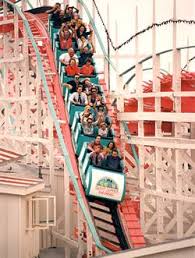
This account will continue to be a roller coaster ride (we think we are still climbing a steep airline hill). A roller coaster is fun for some but a nightmare for others. Having broken to the top side, it is our hope to never go negative again. As realist, we expect to see big jumps and dips in the future. In an older aggressive account, we dropped sharply during the same time frame but are now on net new highs. This account did so well in late 2002 and 2003 that it is no big deal to see it jump up and down a little.

I send my thanks to my friend. It was a surprise to me for the account to be down so much so fast. I appreciate the confidence he showed at the bottom. As an private investor, I am helping my friend at no charge. As an old retired guy, this adds meaning to my life and I am thankful. I helped another friend make a quick $40,000 profit on a low risk real estate deal earlier this year. Life is grand. Roller coasters are fun.
BULL MARKETS ARE EVEN BETTER! THE GOOOGLE GULP IS PAYING BIG DIVIDENDS!

Airline Stocks: Northwest gains upgrade, leads broad sector rally - Airlines - Transportation - Markets/Exchanges - Market News

FIVE OUT OF NINE IS NOT BAD!

This morning five of my families stop performing stocks are airline stocks. Unfortunately, we do not own Ryanair which posted a 19% jump in profits.

NWAC is our top airline this morning. It received an upgrade from Merrill Lynch. CAL, our largest position, is up 4%. One must use caution now that Merrill has jumped on board. The favorable report may push the stock ahead too far too fast. The moves of recent weeks have been substantial.

BUY THE BULL BUT DON'T PILE ONTO WINNERS!

The Globe and Mail: Economy grows at 2.3% rate

JAPAN UP--CANADA AND MOST OF THE REST DOWN!

The Japanese economy made the news today; the malaise that started in 1989 may finally be over. In the meantime, the world economy is slowing. Canada grew at only 2.3% the past quarter while Germany, France and other European countries are in or near recession.

Now-a-days, the worlds economies are closely linked. There is a much higher relationship than in past years. This means that as Europe lowers short interest rates to stimulate their economies, the FOMC will have room to lower US rates without currency concerns. The US dollar has strengthened in recent weeks while the Eurodollar is reeling.

The bottom line is that declining interest rates will boost corporate profits and demand for stocks. US stocks owned by Europeans will increase sharply.

THE BULL MARKET IS HERE!

EBAY RESPONSE

In response to a regular readers inquiry in regard to eBay, I quoted several sections from the annual report. As a private investor, I cannot make recommendations but I can report that eBay has been a very profitable holding for my family and that we intend to continue to hold. We bought more two or three weeks back when the stock was in the low 30's.

The numbers reported in the annual report are just like the ones for the past 10 years--truly remarkable. The room for continued growth was also made clear.

"...listed more than 1.4 billion items last year, a 45% increase from 2003."

"...successfully closed listing on eBay, of $34.2 billion in 2004, up from $23.8 billion in 2003."

"Operating profit grew more than 68%..."

"...free cash flows growing more than 95% to $992 million."

"2004 was a year of expansion...in India...Philippines...Malaysia...Korea...US (Rent.com)...Germany...the Netherlands...craigslist.org..."

"PayPal...adding 23 million new accounts in 2004 for a total of 64 million user accounts."

"PayPal now has more accounts than the total cardholder base of Discover and the account base of Bank of America."

I also wrote about the potential I see in China and in continued PayPal growth. No other company has been able to develop a system to compete directly with PayPal. American Express and Visa are not about to roll-over but PayPal is giving old systems a run for the money.

The stock has been and continues to be a very expensive stock. I wrote that my family has invested much more into CAL. CAL is considered by most to be a more risky stock than EBAY but not by me. When one buys EBAY around the current price, he pays $12.83 for $1 of sales. When one buys CAL at the current price, one pays $.09 for $1 of sales. Using Price to Sales as a guide, EBAY is 142 times the price of CAL!

I calculated this morning that my families position in EBAY is less than 1% of our total holdings. We are comfortable holding a very high priced stock as part of a portfolio of assets. We know that high priced stocks historically under-perform the market by a large measure. It is a very rare stock that can maintain a high valuation for decades and that is what it will take for EBAY to be a good investment from here.

A similar blog could be written about My family owns shares in each of these and our largest position is now in GOOG. Brokerage firms are making news as they announce price targets of $300 or better for GOOG. If I did not own the stock, it would be a tough decision to buy it at $270 per share. I believe it will be added to the S&P 500 before long but this is a relatively weak reason to buy a stock.

If I did not own, I would probably buy because the long-term growth is going to be very large from here. However, I am mindful of the many studies (Dreman, O'Shaughnessy, Siegel and others) that show poor long-term performance of high priced stocks. Growth is not as important as what you pay for growth. After the quick Google move from the $190 area to $270, one can argue that the market is now over-excited about the growth prospects. My family will hold onto GOOG, YHOO and EBAY. These bucking broncos should give us an enjoyable ride. Again, we hold a lot of other positions. I avoid mentioning all holdings and strategies (I'm not willing to freely give away all I have learned over the past 40 plus years of investing, but I am willing to assist with the management of portfolios).

BUY THE BIG BULL MARKET! JAPAN HAS FINALLY GOTTEN OVER THE BUST OF 1989! EUROPEAN CENTRAL BANKS ARE READY TO LOWER INTEREST RATES! THE US DOLLAR IS LIKELY TO APPRECIATE FOR THE FIRST TIME IN YEARS! US STOCKS ARE ON A ROLL! THE MARKET MAY HAVE MOVED TOO FAR TOO FAST BUT IT IS A MISTAKE TO PLAY THE GAME OF BUYING ON PULLBACKS! YOU MAY NEVER SEE THESE PRICES AGAIN!

NewsFinder

AMTD TD IN ADVANCED TALKS!

AMTD has tried to buy TD Waterhouse for a couple of years. TD has wants to expand but wants to run the show. ET made an offer for AMTD but AMTD wants to run the show. As owners of AMTD and ET, my family is eager to see consolidation provided AMTD does not pay too much for TD Waterhouse.

AMTD did a marvelous job of integrating its past take-over targets. AMTD retained most of the customers and consolidated back office operations smoothly. A lot of investors total misunderstand the costs of "electronic service businesses". A successful businessman said to a group the other day that he couldn't see how cell phone companies make money when the give away $200 phones. I don't know the exact numbers but I figure that after the equipment is in place, it cost about $.50 per month to provide cell phone service that is billed at $35 per month. It probably cost far more to bill and collect the $35 revenue than it does to provide the service. In other words, the entire business is about amortizing the equipment costs which includes everything from towers to hand sets.

There are brokerage firms that offer "free" transactions to large accounts. My family trades mostly with BrownCo. We pay $5 to buy or sell stock. We know that $2 of the trade goes to pay the exchange fee. If BrownCo can turn a profit at $5 per trade, then AMTD can certainly do well when charging $10.50 per trade. It was a big deal when Schwab lowered its "discount" commissions to the same range as AMTD and ET. The good news for the companies is that as a group they are playing a good game of "tit for tat". This means that no one has been willing to offer services at a loss to out-grow their competition.

One of the biggest mistakes made in business is to charge too little. New owners of businesses often fall into the trap of offering "specials" at below costs to attract business. They often attract business that they don't want in the first place and business that is "hot". The guys that came as the result of low price are constantly looking for a lower price elsewhere.

Give me the customer that wants my product for a fair price. I will take care of him and he will take care of me. As long as I provide a good product or service, he will be loyal. He will not spend half his life looking for the best deal and I will not abuse his trust by over-charging.

After AMTD has opened an account, the cost of executing a trade electronically is about the same as the cost for Google to post this blog for me. The acquisition cost to acquire the account is much different. Google offers the service for free and does not need to advertise or promote the service. AMTD, ET, TD and Schwab all spend large sums advertising. The game now is about marginal revenues versus marginal costs. The established systems can handle more business for next to nothing more in costs. Adding TD customers to the AMTD platform would involve effort to move accounts from one system to the other or to convert the old system to the new system. After the moving costs are amortized, a very large proportion of the new revenues will go to the bottom line.

THERE IS A BIG BULL STAMPEDING! INTEREST RATES IN EUROPE ARE COMING DOWN! IN 1984 AND IN 1994, WHEN THE FED STOPPED RAISING SHORT RATES, THE MARKET TOOK OFF! GO BULL GO!

Monday, May 30, 2005

WSJ.com - China Cancels Tariffs On Textile Exports

WSJ.com - China Cancels Tariffs On Textile Exports

Politicians need a whipping boy and China is currently serving well. The recent fuss over trade is the US and Europe demanding China to respect intellectual property rights. The big lever being used is textile trade. The US and Europe benefit from the low cost production of textiles in China, but we also want to get paid royalties due in other areas. If the Chinese would fairly spend some of their profits on intellectual property, the trade would be good for all.

A list of US intellectual property is long. Companies like QCOM, IBM, and MSFT are "ripped off" millions of times daily. Of course, music, TV and movies are also routinely pirated.

Some years ago, Japan was one of the worst offenders. As pressure built and the years past, Japan realized that it needed the protection of international law for its own intellectual property. As the China economy grows, China will want to enter the business of selling intellectual property at higher margins than are available from knitting socks. It is in China's long-term interest to comply with international law. Of course, it is easy for China to ignore abuses and say it is not their fault.

QCOM receives about $20 in revenue each time about half the cell phones in the world are activated. The China market is huge. One can see why a company like QCOM desires international compliance.

It is important that China obey international law. The smoke screen over the peg of the currencies is just smoke. It is not nearly as politically powerful to say, we are not going to buy under-wear from you until you pay us cell phone royalties.

Those who believe China is taking all the good jobs are misinformed. China has lost about 4 manufacturing jobs for each American manufacturing job lost. Today's world can manufacture more goods using less people. This is called productivity. A century ago, the number of farmers required to grow our food was maybe 60% of the population. Today, about 3% of the US population is farmers. China didn't take all the good farming jobs either.

We live in a wonderful time. Disposable income is high and growing. In the same way that years ago, Americans became two car families, they are now becoming two home families. Trade with China is one of the reasons we can afford two homes. America learned a valuable lesson in the years after Smoot-Hawley. We participate in free trade with many nations. CAFTA needs to be passed. Pressure on China to comply with international law is important but we need to be careful not to kill the goose that is supplying us with golden eggs.

BUY THE BULL!

WSJ.com - French 'No' Vote Blocks EU Treaty; Huge Setback for a Stronger Europe

WSJ.com - French 'No' Vote Blocks EU Treaty; Huge Setback for a Stronger Europe

The best one word description for the European economy is malaise. There is no end in sight. The central bankers are lowering interest rates in an attempt to boost the economies. Unemployment in France is over 10% and in Germany over 12%. I believe it was 1847 when the US tried to isolate the US economy. Europe tries to hard to protect its manufacturing base. America has benefited by buying labor intensive products from low cost producers. The US in effect profits from the low cost goods as this allows our companies to focus on more profitable enterprises.

Stocks in Europe have done well recently. The reforms in Germany and France will improve or lower the total costs of production. For example, it is now legal for the French to work more than 35 hours per day.

The Eurodollar has weakened recently. Relative interest rates and relative growth rates are now in favor of the US dollar. Foreign investors in US dollars should benefit from superior returns and a bonus from currency moves. The US BULL market is alive and well.

BUY THE BIG BULL!

Saturday, May 28, 2005

Creative Destruction

Creative Destruction

During the dot.com days, you may have heard too much about "creative destruction". However, the process of "creative destruction" is very much alive in today's economy.

The term was first used by Joseph Schumpeter. The easy way to understand the idea is through example. Today, cell phones and VoIP phones are killing the old land-line phone business. Consumers are gradually replacing high cost phone service with more convenient cell phone service or very low cost VoIP service.

Over the next few years, a merger of cell phone service and VoIP service will make high cost land lines a thing of the past. No doubt, the late adopters will hold onto land lines for a long time and land lines will be offered in bundled packages at shapely discounted prices, but in the majority of cases the land lines will be replaced.

Verizon, SBC, BLS and other land-line phone companies are currently spending billions to build high speed internet service capacity. Again, land-line service will be offered as a part of a package of services but the days of paying $25 or more per month for traditional "local" phone service is on the way out.

Americans lead a blessed existence. We often fail to appreciate that our free economy allows us to adopt new products and services with relatively little pain. Other more protectionist economies, allow old inefficient services to bleed to death slowly. America is a more efficient economy because we are open to change.

Fortunately and unfortunately the ground rules of our economy are often slow to change. There are many times when old laws prevent the forces of creative destruction to work. Our governmental system of checks and balances works well but is very slow at times. The recent compromise in the Senate will have consequences that are impossible to forecast. The net total effect is going to lead to some outstanding changes.

It is hard to appreciate how the compromise will benefit the country. What the compromise will do is allow for legislation to pass without it being forced through by one party. The resulting legislation will be weakened in some ways but improved in others. Yes, even in our government, the US practices the art of creative destruction. The old is going to be replace by the new.

There will be many discussions about the process in the years ahead. Politics will obscure the power of the compromise. But, again, legislation will pass and judges will be confirmed as a result of the compromise.

Let me leave you with an example of things to come. Depression era legislation to "protect" community power control needs to be over-hauled. Check into the acronym PUHCA. You will find that big changes are under-foot. Warren Buffett is investing 9 Billion in power generation partly because the "new deal" antiquated laws are likely to be changed. Profits will be made by efficient power companies and small inefficient companies will go away. This is good for America. It is good for consumers. Creative destruction is a good thing.

BUY THE BIG BULL MARKET! YEARS OF CHANGE ARE AHEAD! CHANGES THAT WILL LOWER THE COST OF ELECTRICITY TO AMERICAN CONSUMERS AND AMERICAN BUSINESSES!

Skype Tops 100 Million Downloads - BizReport

Skype Tops 100 Million Downloads - BizReport

Skype reported 100 Million Downloads more than a month ago. VoIP is "creative and destructive capitalism" at work. The telephone world is changing quickly. We will down-load Skype on our new computer at the beach. For most of us, there is no good reason to continue to pay monthly rates for a traditional land-line phone.

This is one of many current situations where cost are being driven down. Technology and free trade are the major factors behind the incredible growth in productivity that is occurring around the globe. China has enjoyed a productivity growth average of better than 6.5% for a decade. During this time, long-term interest rates have fallen, fallen some more and some more. One should not expect inflation or high long-term interest rates as long as the aforementioned forces of "creative destruction" are alive and well.

BUY THE BIG BULL--IT MAY REST FROM TIME TO TIME BUT IT IS NOT GOING TO BE CORRALED EASILY! DO NOT STAND IN THE WAY OF THE STAMPEDE!

CPA and Former Merrill Lynch Broker Says

In many businesses I see, what appears to be a negative can turn out to be a long term positive. Airlines can use the problem of higher oil prices to adjust ticket prices up. However when oil prices come down, the odds are the ticket increase will not be returned to reflect those lower costs. Airlines were always considered classic oligopolies or businesses that move in directions together rather than competitive businesses like grocery stores. I believe they will attempt to recapture some of the oligopolistic tendencies that served them better in the old days.

Furthermore the airlines are restructuring and reducing their number of flights. I would imagine NWAC would be more than glad to operate a little more like the low cost providers, like LUV, and only run two daily flights from Raleigh to Chicago as opposed to the current 4. A

We shall see.

Friday, May 27, 2005

Surprise--America Owes Too Little - Forbes.com

Surprise--America Owes Too Little - Forbes.com

After reading LJ's post at Scroogeview about leverage, I could not resist re-posting a link to an article by Ken Fisher in Forbes. Ken is one of the all time best--a professor of stocks. He makes a clear case that America could use more leverage and make more profits.

This point is a little different than the point made by LJ. Fisher shows that the total debt owed by the Federal Government is low relative to our total assets. Furthermore, the US is extremely efficient in its use of capital and the country could take on more loans at a profit. Like a business who has a marginal cost of capital that is below its operating margin, it makes sense to borrow more.

The naysayers who whine about investments from China are confused at best. It is in the best interest of Americans to buy goods cheaply from China and to sell them treasury bonds at low interest rates. What business would not want such a sweet deal? Think about it, if you could buy goods from China at very cheap prices and China offered to floor-plan the goods at treasury bill rates, would you not quickly become a major importer of goods!

BUY THE BIG BULL!

Scroogeview: More Profits, Same Sales

Scroogeview: More Profits, Same Sales

Leave it to a CPA to understand operating leverage. Other investors would do well to gain an understanding of leverage.

As LJ points out, there is more leverage in the system than financial leverage. The current situation is that companies are increasing profits without increasing sales.

This point is very similar to a point made by Professor Jeremy Siegel; fast growth is not as important as how much you pay for growth!

In this Bull market, the economic growth is reasonably good but the profit growth is outstanding; analyst continue to be surprised and they have been forced to raise their projections of profit growth.

BUY THE BIG BULL!

Stocks or Bonds?

Stocks or Bonds?: "TELEFLEX-TELL A FRIEND
STOCK OF THE WEEK :


Smart investors buy what other investors do not want with investors avoiding auto production, we're taking the plunge.

Teleflex Incorporated, has been a leading global supplier to the automotive, marine, industrial, medical and aerospace industry for 60 years. As experts in the markets they have revenues exceeding $2 billion, and operate in 27 countries with 3 diverse business segments: Aerospace, Medical and Commerical

Looks like 2005 will be a strong year for the company--We're jumping in"

Bill Cara: Capital Markets & Social Equity

Bill Cara: Capital Markets & Social Equity

On May 16, Jim Cramer did one of his (becoming famous) 180's and said he would no longer recommend oil stocks. Bill Cara said he would take the other side of the trade and buy oil stocks. Today, Bill has posted the recent move in energy stocks.

On May 17, I said I would not take either side of the energy trade but would keep buying value stocks. I have been buying stocks that offer high sales per share. One group in particular has been the airline stocks.

The bottom line is that I have been having even more fun than Bill (without doing a detailed analysis, it seems that Cramer has hit some good stocks but has also churned in and out of a lot of stocks with only a small profit or a small loss). My families most aggressive account has experienced several days of net new high gains. Yesterday was a very sweet day as our equity jumped more than 4%! When you are already sitting on net highs, it is fun to have another strong up day. The excitement comes with our belief that the airlines are just beginning a long-term move.

One of our fundamental beliefs is that investors should keep their costs low. One way to do so is to trade infrequently. In addition to lowering brokerage fees, one can hold for long-term gains to cut the tax burden by better than half (one can deduct up to $3,000 in net short-term losses each year).

Bill may have won his 10 day bet with Cramer in one sense but the oils have not been the top performing group during this time. Yesterday, the average airline stock was up 4.76% in one day! Even better, the gains made will not be taxed for probably 4 more years and even then at half the short-term rate.

The price of oil is up again today, but how long will it last? The reason Buffett purchase a power company is because electricity is going to be used indirectly to power automobiles. The continues to use more and more coal and less and less oil. Airlines are going to raise ticket prices to more than off-set the price of oil!

BUY THE BIG BULL! MOST STOCK GROUPS ARE GOING UP!

STOCK MARKET LEADERS

Two market leaders today are DAL and TIVO. We are not adding to either position today but we have added another airline to our portfolio

We have purchased shares in AWA for $5.43 per share and are declaring it a Stock of The Week selection. AWA, the symbol for America West Airlines, has entered an agreement to purchase USAir. Airline traffic is back to levels reached in 2000. Load factors have reached long-term peaks; fares are rising; full seats at higher prices will increase revenues significantly.

Our stock of the week selections already include two half positions in airline stocks. A full position in AWA gives us a total of two positions. Given the size of the portfolio, it is reasonable to purchase additional shares in this industry. In our aggressive family account, we now own 5 airlines. In order of position size they are CAL, AMR, NWAC, AWA and DAL. CAL is our largest holding--Google is making a good run for the honors but has a ways to go.

TIVO is a volatile position with tremendous potential. We tripled up our position a month or so ago and are enjoying the recent sharp jump in price.

Airlines are probably the most hated stock group. The market is warming quickly. This means the stocks are approaching an over-bought position which means they may need to suffer through another correction phase. I would not bet on this possibility. The long-term up-side potential is too strong; one should not play games and miss the big move.

BUY THE BIG BULL MARKET! FROGS HAVE BEEN FEELING THE STEAM! MANY ARE JUMPING OUT OF THE POT! STOCK AFTER STOCK IS BREAKING TO THE UP-SIDE!

Thursday, May 26, 2005

NET NEW HIGHS AGAIN AND AGAIN!

As always, it is fun to be hitting net new high portfolio values before the market gets back to net new highs. Owning airline stocks sure makes it easy to accomplish. Today the airline index was up 4.76%! Our biggest position was the leading group making us happy.

News reports are that the summer airline season is expected to be the best in years. Traffic growth of 6% is expected. Of course fares will rise on flights that are almost sold out.

Airlines are traditionally "second half" stocks. These means they tend to do well during the expansion phase of the business cycle. This cycle will last 2 to 4 years.

Please note that help is available at no charge. If you need another opinion about an account please give us a "holler".

BUY THE BIG BULL BOOM BUBBLE BEFORE THE FROGS JUMP OUT OF THE POT!

Bill Cara: Capital Markets & Social Equity

Bill Cara: Capital Markets & Social Equity

Boeing has made a giant move for a big stock, however, I urge sellers to proceed with caution. We have never had international commerce to the extent we have today. For example, I know of a relatively small NC furniture company whose management have been making frequent trips to China. CAL has recently added flight after flight to international locals.

In the past, Boeing has performed well during the second half of an economic expansion. Short-term, BA may decline in price a little. My family does not own the stock but as long-term investors, although this stock would not be our first choice, we would be comfortable buying at today's price.

Selling anything in a bull market can be the biggest financial mistake you will ever make. Stocks can easily go up 25% in price this year.

BUY THE BIG BULL!

Wednesday, May 25, 2005

TALKING HEADS ARE MISSING THE POINT!
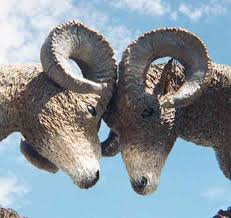
When talking heads are upside down, how can the public not be confused? Today, I have listened to a number of market commentators and I have read a number of blogs. One good discussion included Ed Yardeni as a bull and Bill Gross as a bear. Barry Ritholtz tried to explain the "conundrum" of a 4% 10 year bond in the middle of a strong but slowing economy on Kudlow and Company.

The reason that neither the bulls nor the bears can put this economic puzzle together is because they either do not focus on an important piece of the puzzle or they do not see the size of the hole that it would plug.

Productivity in China has grown at a compounded rate of better than 6.6% for a decade or more. Six point six percent productivity is a huge number. During this unusually strong run, the work of two people has been replaced by the work of one person!

If a business is able to be more productive than competitors, the business makes more profit. Therefore businesses have incentive to increase productivity. When competitors catch-up, consumers are the winners. Both businesses make and their products more cheaply and consumers buy at lower prices.

Politicians have bashed China for political reasons, but the truth is that Americans are buying goods at incredibly low prices. By opening our markets to free trade, America has been challenged to increase our own productivity. The progress made in the past 10 years is unprecedented. America was already an industrialized economy so it was not possible for us to experience the same productivity rate as China. However, our rates have been incredibly high. For 10 years, our productivity growth averaged better than 4%.

Again, the consumer is the winner when all businesses reduce the cost to manufacture products. Inflation has been on the run for quite a number of years. The costs of many goods and services have declined. Many times the savings realized are not obvious to consumers. When a consumer buys a book from Amazon, the nominal price might be 25% below the price of the same book at Barnes and Noble. The savings are not equal to 25%. Most likely the book was delivered by Amazon free. The consumer that took an hour to drive to Barnes and Noble spent extra money on gas other transportation costs and he "lost" an hour of time. The total savings to the consumer may have been more than the total nominal price of the book.

Every single day, billions of transactions happen that cost less now than they would have a few years ago. After several years of strong economic growth, it is natural for market watchers to expect inflation to rear its ugly head; but, it has not!

The bears see the 4% yield on the 10 year treasury bond and assume the bond market is forecasting very slow economic growth and perhaps a recession. The bulls see a 4% yield versus stocks at 16 times earnings and say stocks are so cheap that the economy has to strengthen. The bulls avoid bonds because a 4% yield does not seem to be compatible with strong economic growth. Ironically, the bears and the bulls have been making money. Bonds have appreciated in value as have stocks. Only those who are hiding in money market accounts are getting creamed.

INFLATION HAS BEEN TAMED BY PRODUCTIVITY GROWTH!
Again, productivity may start out as a benefit to a business and indeed business profits continue to be stronger than all expectations. However, productivity generally becomes a benefit to the consumer. A productivity growth rate of 4% shows up eventually as almost a 4% disinflation rate for that particular product. The other beneficiary is the wage earner. If productivity is up 4% and wages up only 3%, the 4% is against the total product cost whereas the 3% is only against the wage portion of the product costs. Productivity gains can be shared at least temporarily three ways--increased company profits, increased wages and lower prices to consumers.
I submit that the 10 year rate of 4% is not forecasting a supper slow economy (although the economy is slowing) as it is forecasting a super low inflation rate. The FOMC preferred measure of inflation, the PCED, shows a rate of 1.6%--before the recent declines in oil and commodities.
Oddly enough, the ten year rate is also being held down by the fear of the housing bubble. The number of boomers who are ready to buy second homes is being pushed down because of all the hype about the real estate bubble. The demand for second homes at these low rates would indeed be much higher if buyers were not being bombarded by "news" of the real estate bubble.
A bubble in real estate will exist when most market watchers capitulate to the idea that Americans on average can now afford two homes, that there are millions of Americans at prime buying age, and that the housing boom will continue for years to come. The current fear of a bubble has definitely slowed housing sales.
We are living in an era like non before this one. Even the industrial revolution did not change the world as quickly as our world has been changed in recent years. The increase in the average standard of living has been remarkable. Investors have already forgotten that birth control pills have dramatically changed our world. Families today with two children have little understanding of the difference in their standard of living between their family and a family with 4 children of just a few years ago.
One of the prime reasons the crime rate in America has gone down sharply is because the birth control pill has reduced the number of unwanted children (In "Freakonomics", Steven D. Levitt gives a lot of the credit to Roe vs. Wade). Grand children are currently participating in the largest inter-generational shift in wealth in history. The wealth of grand parents is being split in pieces that are larger than ever before.
The point is that there are many powerful disinflation forces and wealth creation forces at work today that were not present a few years ago. Free trade, lower birth rates and technologies from cell phones to internet services are powerful forces. We are living in a golden age. It is time to stop fretting about low interest rates and to realize that low interest rates are a blessing.
BUY THIS BIG BULL MARKET!

DO THE GOOGLE GULP!

Google continues to get a lot of "ink" in the blog world. Again, this is one of those over priced stocks that has huge potential. Investors should by a moderate amount and lock it away. Everyone knows newspaper advertising is dying at the hands of internet advertising. Everyone knows TV, Radio and other advertising is getting by passed. Everyone knows there will be tremendous growth in internet advertising and everyone knows Google is getting a major share of new advertising. Google will become a very big and very profitable company. No one knows just how big.

DO THE GOOGLE GULP!

The Big Picture: Nasdaq streaks

The Big Picture: Nasdaq streaks

Another good post from The Big Picture. There have been 2080 NASDAQ streaks since 1971 but only 39 streaks of 39 days.

The Bull is running. He rested today but the run has been strong enough to expect it to follow through in the coming weeks.

BUY THE BIG BULL MARKET--STOCKS ARE CHEAP RELATIVE TO BONDS AND REAL ESTATE!

Airline Stocks: Airlines trade higher as AMR notches gains - Airlines - Transportation - Markets/Exchanges - Market News

Airline Stocks: Airlines trade higher as AMR notches gains - Airlines - Transportation - Markets/Exchanges - Market News

My family is enjoying the rise in AMR. It is leading the airline index. We have more CAL than AMR but both stocks are doing well.

THE BIG BULL IS RESTING BUT READY TO RUN AGAIN!

BEACH BLOGGING

It is 5:40 in the morning at Myrtle Beach SC. The sun is trying to peak through the clouds that hang like pictures over the ocean. The moon was full a couple of days ago so the tides have made huge shifts daily. Twice each day the beach is almost gone with water lapping the dunes and twice each day the beach is as wide as you will ever see. One couple is walking hand in hand on that very wide, long and beautiful beach this morning.

I don't blog as much while at the beach but it is more fun. My Mom and Sister are here with me and my wife. We have eaten too much but we have walked 5 miles or more each day. The weather has been fantastic but the high today will be in the low 70's.

Marilyn and I met with a real estate lawyer yesterday. He continues to close properties at a rapid pace. Recently, he has closed hundreds of undeveloped lots. Boomers who are five years or more away from retirement are buying empty lots along the inter-coastal waterway. The price of undeveloped land 5 miles from the ocean but on the waterway has soared in the past two years. The lawyer sees no slow-down any time soon. He says the demand from 50 year old couples to own a second home is no where near satisfied.

My belief is that investors should pay up to buy ocean front property. The demand is strongest year after year for ocean front locations. Even in a tough economy beach front property is in demand. Careful shoppers are finding older properties at significant discounts to the price of new properties. A dual market has developed.

Developers are marketing new properties to boomers who live all through the northeast and Midwest. Many properties are being sold sight unseen. This makes some sense because those who travel to the beach see only the empty land where the property is being constructed.

The average every day vacationer who shops for a beach condo to buy is taken aback by the price of the new construction- new three bedroom ocean front units are typically priced between $600,000 and $1,200,000 and new four bedroom ocean front condos are typically priced from $900,000 to $2,000,000. Careful shoppers willing to renovate an older property can save $150,000 to $500,000. Many of the 10 to 20 year old buildings look great after renovation and in many cases the units offer more space in addition to the lower price.

The couple I mentioned has turned and is headed back up the beach. It is quiet except for the sound of waves crashing into the shore. Beach Blogging is as good as blogging gets.

WSJ.com - House Vote Eases Stem-Cell Limits, Ignores Veto Vow

Stem cell research holds out the promise of tremendous benefits. The truth is that no one knows if the talk is simply hype. The potential to save millions means ethical questions need to be solved. Research needs to be done. This tough issue is not going to go away. A majority of US citizens see the potential benefits as being significant. Bush has never used his veto power. With solid majorities ready to support legislation in the house and senate, Bush will probably influence the legislation but in the end avoid the veto.

Making money in stocks off pure research is tough. I know of no company on the verge of profiting off stem cells. Of course, if research developed a cure for a major desease such as diabeties, the profits could be large. Perhaps one should buy one of the biotech EFTs.

BUY THE BIG BULL MARKET!

WSJ.com - Buffett Returns to the Deals Table With a Big Bet on Energy Sector

A few days ago, Buffett could find nothing worth buying. Yesterday, he paid 9 Billion for a utility. Furthermore, he said he may be buying in this area for the next 20 years. Buffett negotiates just like any of us who are trying to buy a car. Until the deal is finally made, we can't find a car at an acceptable price.

DUK recently purchased Cincinnati Energy. Consolidation is coming hard to a utility near you! Buy the stocks before they are taken over!

There has been much talk about requiring utilities to offer time of day pricing. Under this plan, consumers might charge storage batteries or convert water to hydrogen at night. The lower price per kilowatt should pay for the batteries in a few years and new fuel cells need hydrogen to operate. Power companies are more efficient when they run full tilt 24 hours per day. Lower priced fuel alternatives can be used. Expensive gas or diesel generators can start up and shut down quickly to meet peak demand but this adds to our energy imports versus using cheap coal that is available.

The reason energy companies have not built new refineries is that they understand the changes coming. GM has worked on fuel cell powered cars for the past 10 years. GM has built and sold hundreds of buses that operate off fuel cells. The technology is getting close to economic large scale production. Big chemical companies have begun using hydrogen to fuel their operations.

The next step in the process is to convert all cars to 42 volt electrical systems. Trucks and SUVs have been converted. The larger batteries will pave the way for the use of hybrid featured cars. Full use of fuel cells will not happen until a distribution system is built. Buffett is going to be involved in the generation of the power. His energy group may also be involved in the manufacturing of hydrogen. A major shift in our use of energy is in the works.

BUY THE BIG BULL!

Tuesday, May 24, 2005

GOOD BOOKS

The following three books are the best of the best that I have read lately.

The Bottomless Well, by Peter Huber and Mark P. Mills.
The Next Great Bubble Boomby Harry S. Dent Jr.
The Future for Investors by Jeremy Siegel .

I list The Bottomless Well first because it is the one many investors need to read the most. Too many folks do not understand that commodities go down in real value over time. One can look at a long-term chart and see this quickly but the ramifications are many. The key realizAtion needed is that inflation is not going to get out of hand because of commodity prices. Tight labor markets are the primary force behind inflation. Free trade has reduced the pressure on labor markets. Therefore, do not be overly concerned about inflation.

BUY THE BULL MARKET!

Bill Cara: Capital Markets & Social Equity

Bill Cara: Capital Markets & Social Equity

Today was a counter trend day. Bill posted a few lists showing gold miners doing well and the winners of recent days such as airlines and online brokers doing poorly.

I told my wife the first thing this morning that the market would struggle after the senate decision but I projected that by the end of the day the NASDAQ would be up--if not the Dow.

This market is too strong for the counter trend to last long. The primary trend could resume by tomorrow.

BUY THE BULL!

Stockcoach's Corner: May 2005

Stockcoach's Corner: May 2005
Stock Coach confirms our stock of the week trading strategy. We look for value stocks that have relative strength.

BUY THE BIG BULL!

The Prudent Investor - seeing too many bubbles: OECD slashes growth forecasts - ECB rejects rate cut advice

The slowing of European economies is good news for US inflation. China is still a hot economy but the currency is pegged. Inflation may get bumped a little because of trade tarriffs with China, but over all inflation is tame. Long-term rates are low, real estate is still affordable.

The Big Picture: Don't Fight the Tape

Watching the tape at the old Harris-Upham brokers office 43 years ago was the first time I heard the phrase, "Don't Fight the Tape". Barry was quick to switch from the big bear to the bull mode. Barry is to be congratulated for having the
good sense not to get locked into a bearish stance.

One of his readers asked about the buy and hold philosophy. A permanent Bull will make excellent money by practicing the buy and hold approach. A paramnet Bear will eventually get burned and burned badly.

I have been pushing stocks hard since August of 2002. I have remained bullish now for almost three years. It has been a joyous ride. The worst four months were January through April of this year. The good news for my family is that we "loaded up the truck" in February, March and April and are currently sitting on net new high portfolios.

Barry correctly notes that the speed of the turn implies that the market may take a rest before the next big surge. It does not matter. It is a mistake to try to catch a bull market on pull backs. It it is truly a bull, the market is not going to let you in cheaply. You have to lasso a bull at full run if you hope to catch the biggest part of the move.

Which sectors is a tough question. Defensive issues have done well as have technology. Gold, materials and energy have gotten slammed. Oil could bounce again but I am betting the other way. Our most recent additions have been in technology, airlines and a couple of weeks back we added online brokerage stocks.

Another way of saying, do not fight the tape, is to buy relative strength. Technology, airlines and online brokerage stocks are out-performing the market. Google is another stock that is making a big push. Expectations are that Google will be added to the S&P 500 index. Institutions currently under-own Google. Million's of shares will be purchased by the index funds if the stock is added. I suspect that the stock will be trading over $300 per share before it is added.

The BULL is in a stampede. Hop on a horse and ride with the heard or get out of the way! The market would have loved a kill the filibuster vote today but before the day is out, I suspect the market will have turned up. The Dow is down 29 and the NAS is down 5 at this moment.

John McCain if running for President, Again

John McCain will get a lot of credit for reaching a compromise to avoid the vote on the filibuster. In the short run, Bill Frist and George Bush are stymied in their attempt to let the majority confirm court judges. More judges will go through than without the vote, but the "moderates" have assumed a powerful roll.

"Moderates" is in quotes as several of the group are out of the mainstream. It is an interesting group to include Byrd, Chaffee, and Graham. The group could propose social security, energy and other compromise legislation.

The American system of checks and balances sometimes creates strange bedfellows. It is also like trying to block water from going down-hill. Finally, passing a bill through congress is like making sausage, the end product is pretty good but no one likes to watch it being made.

Most Americans do not believe the country is headed in the right direction. The time to buy stocks is during times of pessimism. I can hardly imagine more pessimism during a "great" economy. The economy is great because it is ideal for the growth and profit of American businesses. Stable growth with low inflation and low interest rates, what more could an investor want?

BUY THE BIG BULL! AMERICA IS STRONG. THE NET WORTH OF THE COUNTRY IS AT AN ALL TIME RECORD HIGH. WE ARE BUYING LABOR INTENSIVE GOODS CHEAPLY AND SELLING HIGH DOLLAR INTELLECTUAL PROPERTY.

NewsFinder--Gamestop

GME continues to out-perform expectations. Good stock and great selection by Kupsky. Our Stock of the Week selections continue to do well. We recently traded out of our biggest loser. This gives us a realized loss for income tax purposes and moves the money to a stronger stock.

BUY THE BIG BULL!

Monday, May 23, 2005

The Happy Capitalist: Roth 401(k)

The Happy Capitalist: Roth 401(k)

Good info here on Roth 401-K. Roth accounts are fantastic for estate planning. Those who wish to become super rich should avoid tying up too many assets in retirement accounts.

Some folks are leveraging their homes more now-a-days because they have a non-levered 401-K account.

Stocks are under priced. Buy the Bull.

WSJ.com - As Prices Rise, Homeowners Go Deep in Debt to Buy Real Estate

Real estate deals, just like stock deals go bad all the time; most real estate deals of late have been very sweet. Everyone keeps trying to pick the top. The problem is that the top of any market tends to be a steep precipice that is reached long after the first calls for a top. Do your remember the irrational exuberance in the stock market in 1998? The market peaked a couple of years after the call.

Money is cheap-mortgage rates are headed down, 76 million baby boomers are at prime earnings ages and homes are in demand. The real estate market has a good year ahead.

In Big Bull Markets, stocks and real estate go up together. Part of the wealth that is driving the real estate market is in 401-K plans. Those who are saving large amounts annually feel justified in using leverage outside the accounts to buy real estate. This is a perfectly logical action to take.

Lending institutions are being asked to tighten standards. This request is also reasonable. The leverage involved in real estate adds risk. Homes do not normally swing in value more than 20% in a few years time. With demand still extremely high, those who invest 20% in second homes are currently finding 100% equity gains in a very short period of time. The Bull is not over.

WSJ.com - How to Make $600 Million? Get $1.3 Billion

The hedge fund story continues to unravel. At a time when the market is soaring, big players have taken big hits. They are not ready to re-lever their accounts. Move BULL ahead.

WSJ.com - Moderates Reach Compromise On Judicial-Nominee Showdown

The ability to change the court is huge. A lawyer friend tells me that 2% of our GNP is wasted because of law suits and fear of law suits. Our legal system is designed to protect us--not to tax us.

Frank Howard, legendary football coach at Clemson, once said that a tie is like kissing your sister. Compromise can taste about the same.

John McCain, leader of the compromise, is running for president, again. The deal crafted, allows republicans to get judges through the senate. American businesses and consumers have "won".

Time will tell if Bill Frist or John McCain won in regard to their respective campaigns for the presidency. At least 6 democrats agreed not to filibuster. It makes one wonder if compromise can be reached to amend social security. The moderate middle group, democrat and republican, have assumed a powerful roll. The elections of 2006 will be interesting.

I believe the stock market would have responded very positively to a vote to end filibuster of judges. The compromise ends the filibuster. It is hard to gage but the BULL market is still a BULL market. Stocks are so cheap relative to bonds and real estate that any news is likely to be seen as positive for the market.

BUY THE BIG BULL!

WSJ.com - Broadcom Levels Suit on Qualcomm

The royalty battle heats up. QCOM makes money off half of all cell phones in existence. Broadcom is trying to increase royalty income in the cell phone field. My family owns MOT, QCOM and TXN. This is a big and growing business. Sometimes, too much competition takes away all profits.

If my family did not own telecom equipment shares, we would start with half QCOM and half TXN. The patent suit is a buying opportunity for QCOM shares.

BUY THE BIG BULL!

Barron's Online - HDTV: Who Wins, Who Loses

HDTV is coming to a home near you. A bill to be introduced in congress could make the "drop dead date" at the end of this year. To do so would require boxes to be available to switch digital back to analog--for those not willing to spend the money on a new TV. Barron's Online discusses winners and losers. TXN is my favorite winner. DLP technology from TXN is in digital TVs, cell phones and other electronic devices that display information. This technology is particularly good for products that use battery power.


THE BULL MARKET IS HERE! I CAN'T RECOMMEND STOCKS BUT MY FAMILY OWNS TXN!

ENERGY UP--AIR DOWN

One of the groups that is taking a breather today is airline stocks. Several air stocks have had a nice bounce recently and AWA is up again today. However, energy is bouncing back today after a couple of rough weeks.

My money is still on the airlines. This group is being ignored by most investors but business is good. The turn is at hand.

BUY THE BIG BULL BOOM BUBBLE! THE MARKET IS CHEAP RELATIVE TO BONDS AND REAL ESTATE!

MOTOROLA

I added more MOT in a family member's account today. The tech stocks are performing well in the face of lower interest rates and lower commodity prices. MOT has, for the first time ever, announced a $4 Billion stock buy back.

The market is technically over-bought on a short-term basis but the wall of worry is being climbed. The senate may end the filibuster tomorrow. About the only mutual funds being purchased by the public is covered call funds that do poorly in bull markets.

THE BULL IS LOOSE; RIDE THE BULL!

LOW LONG RATES!

Long term rates continue to forecast a slow down in inflation. Tech stocks, housing stocks and other interest sensitive stocks are off to the races.

Low long rates give all potential home buyers a reason to go shopping now! Mortgage rates are heading down for at least one more time. This is an amazing development at the start of the summer buying season in the middle of one of the best housing markets ever.

Buy stocks.

THE BULL IS RUNNING!

Net Stocks: Google's potential inclusion into index drives stock - Advertising - Consumer Services - Media - Manufacturing - Analyst - General

Our Google Gulp has worked well and we see no end in sightThe new Google portal is a great start on a "full service" platform.


THE BULL IS RUNNING!

Heeding Income's Call

1. Public money flows to "hot funds".

2. Hot funds perform poorly.

3. Covered call funds are hot.

4. Covered call funds do well except in bull markets.

5. The Bull Market is here!

6. Buy The Big Bull Market.

Stocks Prove Good Investment


Check out the fabulous "Stock of Week" perfomance on our companion stock blog. Kupskey's stock picks are helping portfolio performance return 16%. Had the same amount of money been invested in S & P 500, the return would be .01% and the treasury yield at 2%.

Current Value of this Portfolio:
$46,229.53 Simple Return: 16.49%
~~>~>~~>~>~~>~>~~>~>~~
S & P 500 Value :$43,936.57 Simple Return: .01%
~~>~>~~>~>~~>~>~~>~>~~
Treasury Bond Value :$41,125.08 Simple Return: 2.82%
~~>~>~~>~>~~>~>~~>~>~~
As you can see, overall individual stocks are outperforming the
S & P 500 and Treasury Bonds with great success.
We sold RGX and took a tax loss of $1024. The proceeds were reinvested in this weeks Stock pick: J. Alexander's BUY THE BIG BULL BOOM BUBBLE!

Past performance does not guarantee future performance. We make no recommendations! If you want to talk about the market feel free to call me during office hours at 336-778-0543 or write meStocks or Bonds, PO BOX 1797, Clemmons, NC 27012, USA

Saturday, May 21, 2005

Winston-Salem Journal | Job cuts likely in merger

Winston-Salem Journal Job cuts likely in merger

Piedmont Airlines was founded and grew up in my home town of Winston-Salem NC. The merger with USAir took the headquarters of the combined company away but there are still hundreds of USAir employees in Winston-Salem. A recent deal has assured Winston-Salem that a reservation center will remain open in Winston.

Now the next merger has been announced. AWA-American West-is buying USAir. USAir is about twice the size of AWA but it has been in bankruptcy twice in the past few years. The new board will be controlled by the current AWA board but the surviving company will be called US Airways.

On Cavuto on Business, Jim Rogers suggested that the airline business is making the turn toward profits. For the past few months, I have been "pounding the table" in regard to airlines and have encouraged my friends and family to invest in airline stocks. Our airline investments in order of largest holdings are CAL, AMR, NWAC and DAL. DAL is considered the riskiest of the four and AMR is considered the safest.

AWA has purchased the assets of USAir with no money down. It has "hired" 30,000 USAir employees at the lowest rates of pay offered in many years. It has had to assume a lot of debt and the new company certainly faces many challenges.

The plan is to cut 5,000 employees through attrition, cut 59 planes, close the USAir headquarters and save $600 million per year. The prior cuts in pension benefits were substantial.

Perhaps the most positive fact one needs to know is that AWA has successfully competed with LUV for the past several years. AWA is a low cost carrier and goes head to head with LUV in Las Vegas, Phoenix and Philadelphia. USAir does 90% of its business through the Charlotte NC hub.

Larry Kudlow says the airline business model is broken. He says no one can make
money off the hub and spoke system. I disagree. Cities like Chicago, Charlotte, New York, etc. will always have sufficient traffic to serve as connection points for numerous other cities. Low cost carriers can always compete point to point but those who need a connecting flight are apt to travel via one of the major carriers. One might be able to save money by taking two seperate short hops but the waiting time between hops adds a cost that many businesses cannot afford.

USAir will emerge from this tough time as one of the majors. The combination of the 7th and 8th largest carriers boots the merged company to number four and gives it a good chance of a profitable future.

One must wonder if DAL will not combine with another carrier. In prior attempts at big mergers, anti-trust concerns killed the deals. Under the current circumstances, it is difficult to argue to kill mergers when the failure to merge may raise costs to consumers dramatically when one of the carriers liquidates. Through code sharing, NWAC, CAL and DAL work together. Without checking the figures, I believe I am right in saying that together these three form the largest US based national and international carrier. (See my post a couple of months back where I showed that LUV is by far the largest US carrier in terms of total stock value--it is no where near the others in terms of sales.)

AMR is a surviving national and international carrier and UAL is a limping national and international carrier. NWAC and CAL cover hundreds of international cities from both the east and west coast. Both firms are experiencing very high load factors on international flights. When high load factors eventually cause high seat prices, the result will be a double whammy. A plane flying 300 seats at an average of $200 per seat generates $60,000 in revenue and is a big loser; whereas the same plan flying 350 seats at an average of $600 per seat generates $210,000 and is a big winner. The cost to operate the two flights are not very different.

My family will buy AWA. We have close friends who recently invested their 401-K funds to start a small business. We wish them the best and pray for them but we take substantially less risk investing in 5 large airlines than they take in starting a small business. It is often said that 90% of all small businesses lose money and close down within 5 years. It is possible that one or more of the carriers we have purchased will go bankrupt but I believe there is a ninety percent chance that 4 of the 5 survive. Even if only 3 survive, the 3 survivors will do very well and make up for the loss of the other two.

BUY THE BIG BULL--STOCKS ARE UNDERVALUED ON AVERAGE BY 25%!

One of the best measures of stock value is the price to sales ratio. The airlines have extremely attractive price to sales ratios.

MARKET EMAIL

An old friend who is a CPA, portfolio manager and former broker sent the following email. Editors notes have been added.

Still two floundering airlines. I would think it would be determined how much stress is placed on the employees. I like NWAC. According to report they have somehow cut $5 billion from operating expenses in 2006. They could outperform CAL. (CAL has lowered costs by about $7 per share. A classical turn-around situation, where cost are down and revenues are soaring.)

The real loser in this looks to be DAL. I have a bunch of mileage with them and only wish I could cash them in. The airline analysts still believe there is overcapacity. Probably true. But the market forces(as well as bankruptcy judges) will force the marginal and inefficient players to reduce flights to profitable levels. (DAL has taken a sharp knife to its route structure; it has cut out numerous flights as have other carriers. DAL management stated this week that they expect to cut total costs by $5 Billion annually. Management is trying to make the cuts without using the bankruptcy court. UAL just turned its pension plan over to the PBGC--saving $3 Billion per year. DAL employees know that their pay must be rationalized with the other carriers or their jobs will be lost. The decision would be easy if unions were not involved; never-the-less, I believe a deal will be made.)

Oil prices are trending back to the CRB index. Its funny whenever I explain to people my belief the oil prices were manipulated to the earlier levels people think I'm crazy. Basically oil is a commodity used in industrial and commercial purposes. Over history it trends with the CRB but has a much higher std deviation. I think the current level is OK but is still high. Greenspan's comments are that oil inventories are at 3 year high. Wow!

As we know from standard deviations the swing could and should at some point in time reverse and actually become oversold. That may take some time. But I do believe it will happen. Double Wow! The price over-shot on the way up and may over-shoot on the way down?

I'm still keeping an eye out for the ET and AMTD's of the world. They could surprise many people in 2006 when more people are getting interested in the market. ET at double this price in a year sounds about right. In a bull market, trading volume will triple or quadruple at AMTD and ET. A double in stock price is certainly doable. My family owns more AMTD because we believe it has the higher take-over probability--ET has the most solid, diversified business model.

Cramer had a couple of good thoughts yesterday on St. Joe and Weyerhaeuser. Whatever there book values state, I would imagine they are probable understated by conservatively 50% due to historical acreage purchase prices. I have an uneasy feeling about this one. I bought Weyerhaeuser many years ago based on its land value and for years after-ward the land turned into a cash pig. The company spent money on taxes and maintenance during years when the property produced little income.

LJ

Friday, May 20, 2005

Hedge funds, hedge fund forum - Hedge Fund Lounge is a free hedge funds & hedge fund of funds forum. - Hennessee Hedge Fund Index Down -1.75% In April

Hedge funds moved into negative territory in April. The idea behind hedge funds is to eliminate down months. The negative performance happened before the GM blow up. Hedge funds are under pressure to perform.

The market is over-bought short-term. It may rest or retreat a little but it may keep the pressure on the funds until they capitulate. The resulting up-move could be dramatic.

BUY THE BULL!

Bill Cara: Capital Markets & Social Equity

Bill and Chairman Greenspan are correct to call for the elimination of the Freddie and Fannie subsidy. However, the 40 basis point subsidy is not the cause of soaring real estate prices. There is speculation in the real estate market but for the most part prices are being driven by an old reason called supply and demand.

Besides, long interest rates are in line with where they should be. The rates on TIPS, Ten Year bonds and inflation measures such as the PCED all forecast moderating inflation. Many big ticket items are offered at lower prices today than were available a short time ago; everything from computers to airline tickets.

Take a look at what IBM is doing with computer time. After paying a $5,000 retainer, companies of all sizes can now rent time on a super computer for a small fraction of the costs of last year. Consumers are dropping land based phone lines and newspaper subscriptions. They are substituting "free" services such as on-line instant messaging and on-line news.

Forty years ago, stock market newsletters of lower quality than Bills blog were available by subscription. They were typically delivered once each week, first thing Monday morning, and often cost more than $5 per letter. So far, Bill hasn't charged me a nickle to read his letter.

It is really hard to pump a tank of gas in today's market and believe inflation is tame. The rule that applies is "out of sight out of mind". Most of us do not buy an airplane ticket once a week or a computer once a week but the savings are large relative to the extra cost of the gas. Five hundred gallons of gas in a year cost maybe $350 more than last year. The savings on a lap-top computer might be $1,500. The interest savings on today's mortgages save the increase in price of a lot of hamburgers.

Greenspan is likely to continue to push congress to deal with Freddie and Fannie. I doubt that anything will happen as the congress is doing battle over judges. A republican win on this issue will save consumers and businesses billions if not trillions in the years ahead.

In the mean-time, investors have to deal with inconsistencies in the economic numbers. A case can certainly be made that economic growth is slowing and that oil prices will continue to fall. This argument would imply that the fed does not need to raise rates more. A case can also be made that the economy is stronger than perceived. The latest retail sales, unemployment claims, corporate earnings revisions, productivity growth and more suggest that GNP will grow at better than 4% this quarter! If this is true, the fed may need to snug a bit more.

History has shown that money is made by staying in the market much more than sitting it out on the sidelines. The conventional wisdom of three steps and a stumble is not born out by the data. Stocks tend to move up during periods of moderate rises in short interest rates.

BUY THE BIG BULL BOOM BUBBLE BEFORE THE FROGS JUMP OF OF THE HOT POT! SHORT SELLERS MAY JUMP OR THEY MAY GET BOILED!

BBC NEWS | Health | Stem cells tailored to patients

While avoiding the ethical questions in regard to stem cell research, I will address the age question. In recent discussions with a middle aged couple who have accumulated a decent retirement nest egg, questions about retirement ages came up.

A couple who has reached the age of 50, have about a 50/50 chance that at least one of them will live to be 90! This may not be surprising to you but are you prepared to live that long or longer. The 90 figure is thrown out just like historical figures are thrown out in regard to the stock market. It does not factor in health care advances.

Who knows what advances will be made in the next 40 years? I have often told my children that they should plan to live to be 150 years of age. This is not a prediction. It is the common sense idea that one should be prepared to live comfortably in the event that one does live a long time.

In the old days, it was common sense to buy lots of life insurance on the male bread winner as the risk was that he would die too soon. Now-a-days the bigger risk is that he will live too long.

In a recent speech, the head of a senior services organization said that of all the people who have ever lived to be 65 years of age, 90% of them are alive today! We need the government to reform social security but whether it does or doesn't do the job, Americans need to be prepared financially for longevity.

The break through in stem cell research offers promise of incredible health benefits. Diseases such as diabetes may be eliminated. Investors who have accumulated a million dollar retirement account might safely withdraw $40,000 in current dollars per year and know that he will always have another $40,000 to withdraw the next. Those who cannot live off $40,000 per year need to get busy making sure they have more than $1,000,000 saved. By the way, $40,000 per year may not cover your annual medical expenses in 40 years.

STOCKS HAVE A HIGHER LONG-TERM RETURN THAN OTHER INVESTMENTS--BUY THE BIG BULL WHILE YOU ARE YOUNG--YOU MAY NEED THE MONEY WHEN YOU ARE 120!

Peridot Capital Management LLC- Consistently Superior Investment Returns

Chad Brand post a good blog and a good web site. The web site includes a presentation that shows among other things the disadvantage of investing through mutual funds. I often mention to investors that 80% of mutual funds under-perform the market. Chad reports that the number is 84%!

He sites two reasons for the under-performance. First the funds over-diversify making their gross results consistent with index funds. Then they charge you a list of fees that often includes a big management fee. I did not see a mention of the distribution fee in Chad's work but this one takes the cake. Many funds charge customers a separate fee to cover the marketing costs to sell the fund to new customers.

Another well written missive is about sell side research. Instead of re-posting the info here, I will leave it to you to visit the site. Chad charges a significant fee for his services but in my opinion most investors would be better off using Chad's portfolio services rather than mutual funds or the typical "full service" brokerage account.

I have never met Chad and I have no financial interest in his company. Invest with him at your own risk. I am familiar with Chad only through what I have read on the internet. It is clear that he focuses his investment efforts on the important issues and avoids making the "game too complicated"; the KISS principle works!

BY THE WAY, NOW IS THE TIME TO INVEST IN STOCKS! LIKE CHAD SAYS IN HIS PRESENTATION, THERE HAS NEVER BEEN A 20 YEAR PERIOD OF UNDER-PERFORMANCE. IF YOU WANT TO MAKE SERIOUS MONEY, YOU NEED TO GET YOUR DOLLARS INVESTED IN THE MARKET AND HOLD ONTO THE BUCKING BRONCO (MANY THANKS TO KEN FISHER FOR HIS SAGE ADVICE OVER THESE MANY YEARS--I BELIEVE IT WAS AROUND 1992 WHEN HE FIRST WROTE TO HOLD ONTO THE BUCKING BRONCO).

Business of Senate Is Slowed as Battle on Judges Intensifies | theledger.com

Business of Senate Is Slowed as Battle on Judges Intensifies theledger.com

Many Americans know that the Senate Democrats and Republicans are behaving like school children. However, the battle is democracy at work. Solid arguments are being made on both sides of the issue and a small group of democrats and republicans are attacking from the middle.

The so called "moderate" group is trying to win by getting 6 Democrats and six Republicans to agree to a compromise. This would be enough votes to block the "nuclear" option and the filibuster.

The stock market likes the nuclear option. Businesses have long suffered higher over-head costs as a result of the actions of liberal judges. There has been a huge wealth transfer from the pocket of the American and international consumer to the pockets of extremely well paid lawyers. We are talking about Billions of dollars in legal fees. It is easy to understand why lawyers have contributed Billions of dollars to Democratic candidates and why business leaders have contributed Billions of dollars to Republican candidates.

It took a long-time but Republicans have finally gathered the votes to win. Congress was controlled by Democrats for more than 40 years until 1994. It was only two years ago when Republicans won a solid majority in the House and Senate. President Bush is determined to use the power won to make changes that have been needed for many years.

It is certainly possible that a compromise will be reached--but I hope not. The good news for the country and for the stock market will be that the "nuclear or constitutional" option will go forward. The Democrats will make a lot of noise but the Republicans probably have the 50 votes needed. Democrats are "bluffing at the pot" while showing their poor hand to the Republicans.

Democrats threaten to pull a union style "work slow-down" if the nuclear option is exercised. I hope so. The average American knows very few of the details but "citizen organizations" are prepared to spend millions to educate the public. Already, a multi-million dollar advertising campaign has been launched in favor of a vote up or down for Ms. Owens. This qualified Judge was nominated in 2001. It is a losing hand in the eyes of Americans to prevent her from receiving a vote.

BUY THE BIG BULL MARKET BEFORE THE FILIBUSTER BATTLE IS WON! ESTIMATES ARE THAT BUSINESSES WILL SAVE UP TO 2% OF REVENUES ANNUALLY!

WSJ.com - Wal-Mart to End Movie Rentals Via the Internet

When Icahn won seats on the Blockbuster Board, it was clear that the company would likely stop the price war with NFLX. That has happened. Blockbuster has raised its price. Now, in a deal reminiscent of the deal made between Yahoo and EBay in Europe, WalMart will close its on-line rental business in exchange for NFLX advertisements on its site.

The terms have not been stated, but, in the Yahoo-EBay deal, Yahoo received advertising revenues for 5 years while EBay paid to "own" this market. Chances are that Wal-Mart will make more money off the advertisements than they made in the rental business. The price of the advertisement may explain why NFLX down-played the benefit to NFLX. The company did not raise its guidance with this major competitor out of the way.

There are rumors and speculations that suggest another reason. For sometime, Blockbuster and NFLX have feared the possibility that Amazon would take the business. Blockbuster and NFLX feared they would be squeezed between WMT and AMZN. Now the rumor is that AMZN and Blockbuster are in talks to team-up. AMZN has the skill of operating on-line stores. They do it for a number of brick and mortar companies. These deals have been profitable for the stores and AMZN.

AMZN has traded sideways for a long time while its revenues have continued to climb. Blockbuster now has a cost cutter in charge. My earlier prediction that the company would play a better game of tit for tat is already inherent in the on-line price increase. It is almost always a mistake to try to buy a market with prices well below your major competitors. If a market is worth winning, it should be won with great service offered at competitive prices. There is almost always room for two or more players in any market if operating margins are maintained. NFLX deserves a lot of credit for refusing the meet the blockbuster price. The price spread may have slowed the recruitment of new subscribers but few subscribers are going to leave a good service to join an inferior service at a lower price.

Blockbuster is loaded down with short sellers. I believe a deal with AMZN would be good for both companies. The new Blockbuster management will squeeze cash out of the service to help pay down the large debts and give the real estate values of the company time to appreciate. The company does not need to grow but simply needs to increase earnings through lower costs. My family does not own Blockbuster. We own NFLX, YAHO, EBAY, AMZN and WMT. However, we believe Blockbuster is a much better buy than at any time in the recent past. If there is a deal in the works with AMZN the stock should see a significant bounce. If the company does not do a deal with AMZN but gradually grows on-line subscribers at a competitive price, NFLX and BBI will make money. My family added to our NFLX shares when the Icahn deal was announced, we have been well rewarded. From here we plan to hold long-term.

BUY THE BIG BULL BECAUSE THE SHORT SELLERS ARE GETTING STEAMED!

WSJ.com - EBay Acquires Two Classified Sites

continues to expand its real estate classified business. Real estate listings are like EBAY listings in that consumers want to go to the site that has the greatest number of listings. Another key feature of real estate listings is the advertising potential. Those who are considering a move may be looking for a real estate agent, a lawyer, a mover, a painter, a landscaper, or a mortgage broker.


EBay went up too much and then dropped too much. I expect it to trade back to at least $44 per share before the year is out. EBay has spent hundreds of millions to "win" in China. This is a huge market and revenues are soaring. The willingness to purchase classified sites during this battle royal for China shows that the firm is set to grow in all markets.

BUY THE BIG BULL! THE WORLD IS NOW AN INTERNET WORLD!

THE TECHNICAL SNAPSHOT

After big moves there are always consolidation days. Today was one of those days. Not that the market did poorly but the bounce in energy issues slowed the pace of the recent winners. The long-term energy problem has not been solved. I am not a buyer of energy stocks here but the bounce is not a surprise. The main thing to take away from the energy crunch is that major changes are ahead. One is the silicon car. Cars are all being converted to a 42 volt system. This change will provide the means for many energy saving innovations. Money can be made by buying the right parts makers. But, let's get back to the technical picture.

Closed end funds are trading down. The discounts are widening. This has historically been a good contrary indicator. It suggest stocks should be bought.

AAII Sentiment is at the lowest levels seen since October of 2002. My family used this and other indicators to load up the truck in 2002. The market soared. Buy stocks!

Investors have been only modest buyers of US stock mutual funds in recent weeks. Another historically good contrary indicator. Buy stocks!

Mutual fund cash as holdings have recently risen sharply. Buy Stocks!

The average Price-Earnings ratio is the lowest it has been in 9 years! Buy Stocks!

The T-bill rate of change has dropped! Everyone is talking about the Fed's move to raise short-term rates but the momentum of the shift is dying quickly. Of course a quarter point move off the low of 1% move is a much bigger move than a quarter point move off a 3% base but this is not all. T-bills are now trading around 2.8% (bond equivalent yield) which is a discount to the Fed Funds rate. Also, the future markets are pricing in a pause or two in the increases.

The public to specialist shot sale ratio is very high. The specialist, who tend to be on the profitable side of the market, are in a historically lopsided long position. Traders, who as a group often lose money, have sold tons of stocks short. Many of these shares are at least partially hedged against bonds, convertible bonds, preferred stocks, leaps and options. Many of these hedged positions were put on to take advantage of the sideways market. Many of these hedged positions are spread trades to earn a little money while waiting for the smoke to clear. In the past week, there is considerable evidence that many of these hedged positions are being unwound. In many cases, the unwinding requires the purchase of stocks that were previously sold. Buy stocks!

Oops! There is at least one skunk in the hat. The market has quickly gotten to a short-term over-bought position. Markets often take a break or retrace a portion of a significant move before getting back on trend. The significant resistance area of the past year is within reach. Traders suggest taking money off the table after such a nice run. I am not a short-term trader. I sell short-term to cut losses short and to take advantage of tax breaks but, in general, I hold long-term positions. In my experience, there is more money lost by taking money out of the market at the wrong time than by putting money into the market at the right time. Timing short moves is extremely hard.

Fundamentally, stocks are cheap. Many technical indicators suggest the lows have been made but the break-out is yet to occur. The market seems to like the idea that more conservative judges may be approved when the filibuster of judges ends. Conservative judges could cut business over-head costs by substantial amounts. Law suits costs some businesses a bundle but the treat of lawsuits cost consumers and businesses billions. Consumers and companies could benefit from conservative courts for years to come. The vote in the Senate should take place soon.

BUY THE BIG BULL MARKET, THE BUSINESS ENVIRONMENT IS AS GOOD AS IT HAS BEEN IN YEARS AND THERE ARE MOVES IN THE WORKS TO MAKE IT BETTER!

WSJ.com - Big Price Increases To Greet Summer Travelers

Families are traveling. Vacation spots have raised prices and even airlines are increasing rates. The average rate per seat mile is down 6.7%, way off the bottom and rising.

Vacations are almost pure discretionary spending. The fact that resorts are raising rates shows the economy is stronger than commonly perceived. The fed may need to raise short rates more but don't be frightened away from the market. Conventional wisdom is wrong again; rising short rates are positively correlated with rising stock prices. The biggest drops in the market occur after rates have been too high for too long, we are now living in the opposite world; rates have been too low for too long.

BUY THE BIG BULL! THE FROGS ARE GOING TO BOIL IF THEY DON'T JUMP!

WSJ.com - Maytag to Be Sold To Investor Group For $1.13 Billion

Another opportunity missed! Stocks are so cheap that they are being taken private. The buyout price announced was 21% above the recent stock price.

In 2005 the market may buy out a Trillion Dollars worth of companies. If you own good values, you will hit several buyouts this year.

BUY THE BIG BULL!

Thursday, May 19, 2005

Silicon Valley Watcher: Google Personalized Home Page Launches

GO GOOGLE! GOOGLE! GOOGLE! GO! GOOGLE! GOOGLE! GOOGLE! GO!

Earlier today, my assistant mentioned that I have been quiet about Google lately. I said I am expecting big things in the area of bloggs and RSS feeds soon. We discussed how it would be nice if no one needed to understand what an RSS feed is. We concluded that it will not be long before most folks use a home page that is linked to all of their favorite content.

GOOGLE offered the lab version today! Progress may seem slow but reality is that innovations are coming to market hard and fast. Others have done it before but the Google business model is different. Investors must be aware that rapid innovation from all players in a business can cause cut throat margins and no profits.

As I have reported, my family has purchased Google several times from $85 up to $196 per share. We have not bought any lately. We love the company and we believe the growth this year will blow the doors off the analyst projections. By the same token, we know a battle royal is shaping up between MSFT and GOOG. The coming battle could make all players bleed for a while. AOL is another big firm trying to reconstruct itself around the advertising model.

Google will be one of the big winners. The Google business model is fantastic. It is now estimated that the real estate business will spend more money on internet advertisement than newspaper advertisement within a couple more years. More and more businesses find they get more bang for their advertising dollars on line. Google continues to build market share.

Another huge market, I expect Google to enter before long is the on-line payments market. My family has bought EBAY many times and we added significantly to our position week before last. PayPal is one of the reasons EBAY is among our favorite companies. VISA, American Express and others fight hard and use the banking laws effectively to their advantage but PayPal does billions of transactions and earns a small fee on most. Google pays millions of website owners for the use of advertising space and collects fees from millions of advertisers. Offering a PayPal style account would facilitate these and other transactions.

Google has many irons in the fire. The company wants to do a good job every time. The opportunities that feed off Google's existing product lines are endless. The company just announced a business search engine in cooperation with IBM and the Lotus Notes software. We are in a new phase of growth for the internet. This is the phase where the light goes on for millions of people. More and more businesses and individuals will see or even invent ways to use the power available.

I have not checked the short interest ratios but I suspect there are plenty of folks who shorted GOOG after the last earnings announcement and sharp rise in the stock. The past couple of weeks, the heat has been going up gradually. The sock goes up a few points most days. The short sellers must be feeling steam around their ears by now. GO! GOOGLE GO!

BUY THE BIG BULL BECAUSE THE FROGS ARE READY TO JUMP OUT OF THE POT!

A TIME TO REMEMBER--1982!

Twenty three years ago, in the spring and summer of 1982, the real earnings yield of the S&P 500 exceeded the real earnings yield of the long-term treasury bond. What happened next was an explosion in stock prices. Small cap stocks lead the way in the summer of 1982 and by August the big caps sky-rocketed. The average S&P 500 stock by the end of 1986 had grown at a five year compounded rate of 19.87%! Say it again brother!

THE AVERAGE S&P 500 STOCK APPRECIATED AT A COMPOUNDED RATE OF 19.87% DURING THE FIVE YEARS ENDED IN 1986!

IN THE TEN YEARS FROM 1982 THROUGH 1991, THE AVERAGE S&P 500 STOCK PRODUCED A RETURN OF 17.59% COMPOUNDED!

Although stocks yielding more than bonds is a rare event but they have for the past several months. This is the main reason that I keep writing BUY THE BIG BULL BOOM BUBBLE.

The spreads are not large so most folks ignore them. The recent real S&P 500 earnings yield has been around 2.78%. The real yield (or inflation adjusted yield) on the long-bond is 2.39%. Both of these numbers are probably low because the CPI index over-states the inflation rate in times of easy substitution. The exact numbers are not the important point. The important point is that because a fundamental economic law is that money flows to where it gets paid the most and because stocks are paying more than bonds or real estate, money is starting to flow into stocks.

How far can stocks go? If there were no growth ahead and stocks simply returned to the historic ratios, stocks would go up by 35 to 40%. Odds are very much in favor of growth in the economy--it happens about 8 out of 9 years. If stocks need to go up 35% without any growth and if growth occurs 88% of the time, don't you think it is a good time to buy stocks?

Put another way, in 1982, the last time we had this inversion of rates, a $100,000 investment in the average stock grew to more than $240,000 in five years and to more than $550,000 in ten years. Say it again brother!

THE LAST TIME WE HAD THIS INVERSION OF RATES, A $100,000 INVESTMENT IN THE AVERAGE STOCK GREW TO MORE THAN $240,000 IN FIVE YEARS AND TO MORE THAN $550,000 IN TEN YEARS!

The answer to the readers question, "why can't I make a steady 10%?" is that you must make the occasional 30% profit in order to compensate for the occasional 10% loss. The most important factor in getting a decent long-term average return is in not missing the "sky-rocket in flight". The ten year period above included black Monday, October 19, 1987. I must say it again--IN THE TEN YEARS ENDING IN 1991, THE AVERAGE COMPOUDED RETURN ON LARGE CAP STOCKS WAS 17.59% AND THIS AVERAGE INCLUDED THE "GREAT CRASH OF 1987".

BUY THE BIG BULL BOOM BUBBLE, THE FROGS ARE GOING TO BOIL IF THEY DO NOT JUMP OUT OF THE POT! (EXTRAORDINARY LEVELS OF SHORT SELLING IS GOING TO BURN THE SELLERS BADLY IF THIS MARKET GOES HIGHER--SHORT SELLERS NEED TO BUY STOCKS NOW!)

US Airways, America West tie the knot - Aerospace - Airlines - Manufacturing - Transportation - Company Announcements

US Airways, America West tie the knot - Aerospace - Airlines - Manufacturing - Transportation - Company Announcements

Airline deals are happening. UAL cut its pension costs by $3 Billion a year. DAL hopes to do a similar deal. USAir has already dropped its pension costs onto the PBGC and AWA is buying USAir!

America West is half the size of USAir but the merged company should be able to cut costs further while retaining the best routes of both carriers. Not that there is much redundancy in routes but economies of scale can be achieved in operations.

The classic industry turn-around is in the works. Costs are being cut while business is booming. It is fundamental in economics that if you lower the price more of the product will be sold. DAL made the move a few months back to lower prices in-line with the discounters. Another interesting angle is that while stock analyst cry the blues over the high costs of fuel, high gas prices have helped the airlines make the turn. When consumers fill their auto tanks the increased prices are confrontational whereas airline tickets are cheaper now than 5 years ago. By the way, this is another example of where the inflation whiners are missing the boat. They see inflation everywhere but ignore the fact that more airline tickets are being sold than ever before at significant discounts.

Most planes are flying full or close to full. AWA suggest that it can make a profit even if the price of oil goes back above $50 per barrel. Ticket prices have increased off the lows and more increases will come.

Buying turn-around stocks is not for the weak at heart. If you decide to play the game, spread your risk among several carriers or buy an EFT. As a general rule I avoid mutual funds because I do not like the heavy drag. The EFT drag is typically a small fraction of the drag on managed funds. Besides, no one really knows which of these airlines will do the best. Never-the-less with commissions at only $5 one can easily create ones own EFT and avoid the drag.

CAL has been a very well managed company since it went through bankruptcy about 15 years ago. The top man recently retired. My family owns a substantial stake but maybe the new management will not do as well. We can't be sure but we own shares in three other carriers so far. We believe the average gain in this sector will be over 100% in four years or less.

BUY THE BIG BULL BOOM BUBBLE BEFORE THE FROGS BOIL! THE SHORT SELLERS MAY JUMP AT ANY TIME!

Delta To Push Ahead With Cost-Cutting - Forbes.com

Delta To Push Ahead With Cost-Cutting - Forbes.com

Delta expects to save $5 billion annually! The Chief officer of the company does not say exactly how but this figure is in-line with the savings achieved at CAL and AMR.

WOW!

It used to be that a million dollars was a lot of money. Today, we have airlines saving 5 Billion Dollars per year. The savings at CAL were almost $7 per share per year. These are the kinds of dollars that can turn an industry around.

BUY THE BIG BULL BEFORE THE BIG COMPANIES BUY ALL THE STOCK!

The news continues to be about stock buy backs. MOT announced a buyback for the first time ever. Four Billion Dollars of stock. The S&P bond rating agency has determined no down-grade in the MOT bonds. My family has owned MOT for many of the past 20 years. It is a great company. It went through a tough time after the bubble but is back on track. Companies are buying their own stock because the price is below their cost of capital. Companies can increase their earnings per share by reducing the number of shares outstanding.

A large number of traders are caught like a deer in headlights; they don't know which way to run. BUY THIS BULL! STOCKS ARE CHEAP RELATIVE TO BONDS AND REAL ESTATE! WHAT ARE INVESTORS GOING TO DO WITH THOSE MOUNTAINS OF CASH? BUY STOCKS NOW AND SELL IT TO THE SKITTISH LATTER.

Stock of the Week: PORTFOLIO PERFORMANCE

Stock of the Week: PORTFOLIO PERFORMANCE

Check out our latest "Stock of Week" pick on our companion stock blog. Sandra Kupskey's has been using value criteria to select winning positions. The portfolio simple return since inception is 16%. The same amount of money, invested in S & P 500, would have returned .01% and the same amount in a treasury bond fund would have returned 2%. Great Job Sandra!

Please note: we do not make recommendations. The Miller family owns shares in CAL and AMR. We write only for educational and intertainment purposes. If you would like to ask a question or to discuss investment strategies, please call 336-778-0543 during business hours. There is no consultation fee.

BUY THE BIG BULL MARKET BEFORE THE BOOM AND BUBBLE! THE FROGS ARE STARTING TO BOIL THE BRONCOS ARE BUCKING AND THE BEARS ARE GROWLING! WE ARE SITTING ON NET NEW HIGHS AND ENJOYING THE RIDE!

An aggressive new account that was started right at the market top is still down in price. The account has caught some good tax swaps. Another week like this one would probably put it on new highs.

The Big Picture: Inflation Rate Tame?

Barry produces a professional blog. His rantings are often supported by charts which show the data. It takes a lot of work to do such an excellent job. I send my thanks and congratulations to him.

In regard to the inflation rate, he is wrong. The traditional CPI index does not capture the true situation in our dynamic economy. We substitute better quality at lower prices all the time. In a comment to the post, Chad states that he believes his personal CPI would show little or zero inflation. Mine might even show a negative rate because I buy a lot of TVs, computers and other electronic devices.

In a few weeks, I will buy my wife a new lap-top. I will pay less than 25% of what I paid for her old lap-top. The new one will be about 1000% better. If one saves $2,100.00 on a computer, the price of hamburgers must go up a lot for the two to break-even at zero inflation.

The reason the PCED is the measure favored by Greenspan is because it captures the substitution effect. The law of substitution is big, but easy to ignore. This law chips away at the cost of almost everything. Consumers routinely make "free" long-distance telephone calls today. There are many more examples.

With the opening of trade, the opportunity to buy the low cost item has expanded. Many times the total savings from substitution are huge but not easily noticed. For example, businesses are saving millions of dollars on lighting by buying lights that do not need to be replaced. In the book titled The Bottomless Well, the author demonstrates that the cost of illumination has declined by 10,000 percent in the past 200 years!

IS THE INFLATION RATE TAME? YES IT IS!

The PCED is running at about 1.6% and the price of oil has recently dropped by 20%. It takes a while for the decline in fuel costs to show up in a decline in shipping costs and thus in the price of many goods. The CPI report was fantastic because it showed no increase in prices. It is fair to ignore volatile food and energy prices if you ignore the big jumps and the big declines. How can anyone honestly hold-out a CPI of .5% as high when they already know that a key component was up to $58 per barrel for just a few weeks. The .5% number is telling us that the price of oil hit $58 during the quarter--old news and irrelevant to current investment strategy.

BUY THE BIG BULL BECAUSE THE FROGS ARE GETTING HOT! (THE FROGS HAVE BORROWED BILLIONS OF DOLLARS OF STOCK AND SOLD THEM--THEY OWE THE SHARES TO THE RIGHTFUL OWNERS)

By the way, a spent a few moments last night explaining to a reader how the Fed "prints" money. It works a lot like short selling. The person who borrows shares to sell have in effect "printed" extra shares--the buyer does not know that they are borrowed shares. The total shares "owned" have been increased by the number of shares sold short. I am nervous when companies are issuing lots of shares but short sellers make me happy--sooner or later they are likely to buy the shares back no matter what the price!

Robert Powell: Six ways to make towns more livable for older residents - Real Estate - Personal Finance

If you want to make money, figure out how to benefit from the aging population. A good speaker recently said that of all the people in the whole world who have ever reached the age of 65, 90% of them are alive today!

The linked article mentions things that are important to seniors. Communities are being built where a golf cart sized vehicle will get you to and from the local grocery store and other services. Builders are figuring out what works now. In another 10 years, the baby boomers will demand these services.

Between now and the boomers retirement age, it is time to make money. Buy stocks!

Wednesday, May 18, 2005

INVENTORY TO SALES RATIO--TECHNOLOGY AT WORK?

The inventory to sales ratio has never been lower. Companies have learned how to lower their costs by using technology to reduce inventories.

The information revolution continues to lower costs in industry after industry. Polls show that Americans do not appreciate the savings. Apparently the high price of gas has weighed on the pocketbooks and minds of consumers.

Gradually, Americans grow wealthier. Current figures show that American families now have more disposable income and wealth than ever before. The use of birth control has lowered the average family size. Families of today with two children are not likely to fully appreciate just how financially stressful it would be to raise 4 children.

The case can be made that the extra disposable income is being wasted on videos, game machines, music and cell phones. The truth is that we could all get by with much less, but with costs going down, we can afford more than ever.

Why spend it all now? When times are good, it is the right time to invest for the tough times that may come. Money not used during tough times can be enjoyed during retirement.

THE BOOMING PRODUCTIVITY IS UNDER-APPRECIATED BY INVESTORS. THE EXTRA RAPID PRODUCTIVITY GROWTH IN CHINA IS FUELING SAVINGS TO AMERICANS. THE CONSUMER WINS WHEN COSTS GO DOWN!

The Weight of the Evidence

The view from Comstock partners is pretty bleak. These old pros see recession ahead.

The core reason for their bearishness seems to be the policy of the fed and, primarily, the slow growth of money supply. The article sites correlation coefficients for money slow down and recession that are relatively weak indicators.

The fact is that the fed provided necessary stimulation after September 11. It took a very liberal money policy to keep the US out of a depression. Money supply was plentiful but in the environment of the time the velocity of money slowed. Re-priming the pump has been a tricky task and Greenspan has done the job like the pro that he is. After success was reached and for the past eight months, the fed has gradually removed the stimulus. Naturally money growth has slowed.

Assuming a recession from here assumes the fed continues to raise short rates--regardless of the need. My money is on Greenspan to make the right choice. He catches criticism from both sides, but the attitudes and actions of millions of consumers determine final demand. The economy will always over-shoot or under-shoot at extremes but we are not currently close to an extreme. We have half the whiners worrying over inflation and the other half worrying over recession.

BUY THE BIG BULL BOOM BUBBLE BEFOR THE FROG BOILS OR JUMPS OUT OF THE POT!

J. ALEXANDER'S NOT YOUR ORDINARY RESTAURANT CHAIN

STOCK OF THE WEEK

The oil bubble has popped. Consumers are relieved. After the bills are paid there's a little something left over. It's time to go out to eat.

symbol JAX trades on the American Stock Exchange. Formed by three Nashville businessmen the restaurant operates in 27 locations.
Lonnie J. Stout, II, the Company’s current head has repositioned all of its assets exclusively into upscale casual dining to develop a contemporary American restaurant that focuses on high quality food, outstanding service and great value. To see why we chose J. Alexander's as our "Stock of the Week" pick click here.

High Prices, Unhappy Returns

My favorite financial writers are:

James O'Shaugnessy
Harry Dent
Jeremy Siegel
John Rothchild
Ken Fisher, and
David Dreman.

These guys look deeply into the financial world and make sense out of it. They approach the same topic from various angles and reach the same central conclusions.

The central theme of these writers is the principle of perception versus reality. If most investors perceive that the best group to buy is X and not Y then the value of X is automatically over-valued and Y is the group that should be bought. O'Shaugnessy likes to remind readers of Oakum's Razor or the KISS principle. This to me is the key to successful investing. Once should keep ones approach as simple as possible.

Investors forget that the stock market is an auction sale. At an any auction sale, the most popular item is going to draw the biggest crowd and probably the highest price. The best deal is likely to be the one when you know the value, make the opening bid well below value and then have no competition. At first your heart sinks when you make such a buy. If you lake confidence, you are afraid you have made a big mistake. Good stocks can cause the same feelings. It is hard to like stocks when your peers think you have lost your common sense. My most recent example has been airline stocks. CAL had a price to sales ratio of .05 a couple of months ago. The stock has been a great performer and I have confidence in it; time will tell.

In the linked article, Siegel argues that the fastest growing companies are not the best to buy. He offers several reasons but the big one is that if everyone knows the company is growing very fast, then the price is pushed up too high. The expectation of fast growth in the industry brings in more competition. It is good to own a company that quietly makes a lot of money year after year after year.

In recent weeks, public opinion polls, sentiment surveys, put-call ratios, mutual fund cash flows and other indicators have shown that the public has low expectations for the market. Short sale ratios have grown to high proportions; these borrowed shares need to be repurchased. Cash levels are very high. The market is ready for a big move. Buy stocks!

BUY THE BIG BULL BOOM BUBBLE BEFORE THE FROGS BOIL!
The shorts are covering; chasing the market up.

Investors spooked by bleak forecasts

Gloom and doom was still pervasive Monday. The linked article includes some good numbers. For example, the public sank 29 Billion Dollars into global funds so far this year and only 8 Billion in US mutual funds. Last year by this date the public had put $75 Billion in US funds.

Mutual fund flows are a contrary indicator. Conclusion, focus on US stocks.

At the same time that the public is afraid to buy, corporations are buying like mad men. Companies are buying back their own stock and merging with others. The US is on track to do a Trillion Dollars of mergers this year!

BUY THE BIG BULL BEFORE THE CORPORATIONS BEAT YOU TO IT!

The Peridot Capitalist: J.P. Morgan Recommends Buying Delta

The Peridot Capitalist: J.P. Morgan Recommends Buying Delta

Chad points out that Jamie Baker, DAL analyst for JP Morgan, has been on both sides of DAL twice in the past 2 years. My belief is that analyst feel compelled to say something often so they get caught trying to call every little move. The short-term record of analyst and traders is poor. Many brokers use the calls of analyst as contrary indicators!

Why buy DAL? Business is Booming !

While the analyst are talking about the risk of bankruptcy being priced into the stock, the company is selling tickets like hot cakes. Guess what is about to happen?

Ticket prices are going to go up. Full planes times higher ticket prices yield high revenues. Full planes raise operating cost by very marginal amounts. (The gas used and employee cost to fly a full plane are not much different than the cost of flying an empty plane.) Cash flow is going up. Pension costs and other employee costs are going down.

One of my relatives bought DAL today. His account is sitting on net new highs. We are enjoying this market!

BUY THE BIG BULL BOOM BUBBLE BEFORE THE FROGS BOIL!

The Capital Spectator: THE SPREAD SHALL SET YOU FREE

One can read too much into changes in yield spreads. The ten year treasury and the yield curve are both forecasting low inflation expectations. However, the widening spread between junk and treasuries is probably only the unwinding of hedged trades. The hedgers had pushed the spreads to abnormally low levels which simply could not last.

Hedgers have sold the 10 year treasury short and bought junk. They have been earning a yield spread and have hoped that the credit grade on the junk would improve or that the corporation would buy back the junk, not an unreasonable assumption in a strong economy. Companies with cash to spend have tended to buy back stock not retire bonds. The hedgers are now trying to unwind and there are too many people trying to go out the door at the same time. To unwind, the hedgers are buying 10 year bonds and selling junk.

Stocks are off to the races. It could be a simple move to use some of that leverage to participate in the stock rally. Why sit on a spread trade when the market is hot?

BUY THE BIG BULL BOOM BUBBLE BEFORE THE FROGS BOIL!

The Capital Spectator: WITHERING HEIGHTS

The idea that deflation is the predominant risk is crawling through the blog world. Bill Gross of Pimco gets wide distribution and he now calls for a 10 year rate of 3% within five years. If his call had been within 6 years, I would say his call is better than a 50/50 proposition. Professor Jeremy Siegel forecast disinflation because of massive retirements. Again, the average boomer is only 53 years of age. Professor Siegel might have a point in 5 or ten years.

My point continues to be that traders, economist, investors, academia and consumers are confused. Inflation is the scare one day and deflation the next but fear is present. "Fear and Greed drive the market; buy Fear sell Greed!" (Thank you Warren Buffett!)

The situation is that the world economy is experiencing strong growth and strong productivity growth. Naturally strong growth leads to strong demand for commodities. The ability of buyers to select from low cost producers and the strong productivity growth are powerful dis-inflationary forces. Productivity in India and China have been incredible. If an Indian or Chinese company buys copper for double the price and makes a product with labor cost at a 15% discount to the rest of the world, the final product cost less on average! The bottom line is that investors just do not realize how sweet it is! (Many thanks to Art Carney and Jackie Gleason)

A fundamental rule for making money in the stock market is to stay in the stock market!

Confused folks are likely to buy at the wrong time and sell at the wrong time. Stocks have historically returned 11 to 14% over long periods of time. Most folks try to get out and in too often and no one seems to be very good at getting out or in at the right time. Making 11 to 14% over long periods of time will turn a small nest egg into a large fortune.

Many of the greatest investors of all time have totally ignored economics and the business cycle. People such as Bill Miller stay invested all the time in the stocks they believe are the best values. (This manager of Legg Mason Value Trust has beaten the S&P 500 14 years in a row despite a drag of almost 2%!)

I love economics, I enjoy understanding how the economy works, however, I believe the best investment strategies have little to do with economics. One of the keys to making money is to buy when most people are afraid to buy. A recent Gallup poll shows that Americans as a group currently have a very low opinion of the stock market and the economy. Buy Stocks.

Buy the Big Bull Boom Bubble Before the Frogs Boil!

NET NEW HIGHS!

With the Dow down 4% and the NASDAQ down 8% on the year, it is a blessing to be hitting net new highs. Simple extrapolation projects that by the time the Dow is even on the year, my most aggressive account should be up 4%, 8% or even 12% on the year.

The key reason; the nerve to buy the airline stocks during the worst of the down draft. Today, the airline index is up 5.54%! In recent days, JP Morgan and other firms have up-graded several of the legacy carriers. UAL recently won the right to turn the pension plan over to the PBGC. UAL just lopped off something like $3 Billion of liabilities. USAir and America West continue their merger talks. Most importantly, load factors are very strong for most airlines.

When Delta dropped fares, the public responded. The business is booming but profits are a long way off for Delta. The company is not generating the cash to continue. There is the risk of bankruptcy. The employees at Delta know that they must accept similar pay and benefit cuts or they will put the carrier out of business.

Delta and NWAC are two of the carriers that have been up-graded by JP Morgan. My family has purchased shares in each of them since the up-grade.

NET NEW HIGHS! What a wonderful concept. Buy the Big Bull Before The Frog Boils!

The Big Picture: Line is the Sand has been crossed

Time to give Barry credit for getting back into the market. The pot is almost ready to boil! Will the frogs jump (cover their shorts) or will they continue to die the slow death?

Earlier I said that traders can jump quickly. Barry has made the move to get on board the market. Hedge Funds can simmer a long time because they typically hold a plus and a minus. They are getting killed on their minus but making some of it back on their plus. When the Hedge Funds jump, this market could be explosive.

Barry believes the lows will be tested again. It could happen as short-term moves are impossible to call. However, the strength of this market is such that the shorts are getting squeezed hard. My expectation is for three or four strong stock market years.

Buy the Bull Before the Frogs Jump!

Bill Cara: Capital Markets & Social Equity

John is way off the mark. I am surprised that Bill agrees with him. The premise is that a recession is near and will be caused by continued interest rate increase by Greenspan to pop the real estate bubble. John believes that we will be facing deflation in real estate prices within 12 months; poppycock--bah humbug--no way.

Barring a war or terrorist hit, real estate prices will be higher in 12 months. The comparison that John makes to Japan's real estate bubble is weak at best. The Japanese paid a billion dollars for Pebble Beach! Five percent interest on a billion dollars is 50 million dollars. Can you imagine a golf course with annual revenues of half that amount? Myrtle Beach has over 100 golf courses and I suspect that a billion dollars would buy them all. Beach condos have jumped in value but I have seen none of the "big deals" like Pebble Beach or Rockefeller Center.

John implies that the FOMC has tightened excessively. The reality is that the FOMC stayed overly loose long enough to avoid the problem of deflation; exactly the opposite of John's point. Even the modest increases have exposed stress in other areas; GM, Ford, Hedge Funds and a bankrupt auto parts company to name a few. There is no way the fed can target real estate with short term rate increases. The irony is that by raising short rates, the FOMC has lowered long rates which is part of the drive behind real estate prices. Again, the action is almost the opposite of John's point.

The article concludes with a comment about the spendthrift consumer problem, again all wrong. Consumer spending as a percent of disposable income is modest. Personal income is growing faster than spending. Average family wealth is at an all time high.

John is enjoying solid returns in his long strips and TLT but he is taking a beating on total return when you add in the cash returns and the returns on the defensive stock sectors. John is positioned for a recession but the action in technology indicates a robust economy. We are no where near a recession; I believe John is about 4 years early!

Buy the big bull. The frogs are getting boiled!

BOILING FROGS!

DOW UP 123! NASDAQ UP 25!
THE HEAT IS ON!

Most everyone knows that the way to boil a frog is to put it in a pot of warm water and gradually turn up the heat. The frog sleeps until cooked. Put a frog in hot water and he immediately jumps out.

Hedge funds are getting cooked! Traders hop around quickly but hedge funds often take relatively long-term two sided positions that limit risk--to a point. Hedgers have recently been caught every which way they turn. The hook was set when the GM hedge exploded and long-term treasury rates went the wrong way. Another way of describing the current pain is Chinese water torture. Day after day, the hedge funds are being dripped upon.

Many of the hedge strategies involve bond-stock (sometimes preferred stock) arbitrage or option-stock arbitrage. However, few of these are true arbitrages. A price move in the stock will not exactly be offset by a price move in the bond (convertible bond). Another problem is the option side of some of these trades must be renewed at a higher cost.

The big gorilla facing some funds is the threat of redemptions. Redemption's coming at the end of the quarter are a real problem for those funds trying to meet margin calls. The scramble is on to unwind positions.

The good news is that my family is fully invested. We are enjoying the ride. If you are not fully invested in stocks, you are missing a very nice run. Don't sit like a frog, the heat is getting turned up. Funds are being forced to capitulate. It is impossible to know what all the cross trades are or how big the problem for the funds. What we do know is that short selling set an all time record last month. All those shares sold short provide the fuel for a rising market. I would certainly not want to be short with the Dow up 105 and the NASDAQ up 18.

Buy the big bull boom bubble. Conditions are ripe for a major stock move

VoIP firm Vonage tests routers for mobile service | CNET News.com

Vonage, Nextel and certainly others are hard at work preparing to offer wireless VoIP also know as wVoIP. The NXTL plan cost $40 per month for unlimited service through 7,000 Boingo hot-spots.

Using the "Fool" terms, this application is going to be a rule breaker. Consumers are going to be the big winners. Land line based phones will quickly fade in importance. Six percent of all cell phone users do not have a land-line phone. This number will grow dramatically when VoIP becomes commonly available. Why pay for a "home" phone if your wireless phone gives you unlimited calls through your home wireless router?

Profit margins for cell phone companies comes in several ways. First of all the actual cost to provide a minute of cell phone use is virtually nothing if the towers and other equipment are already amortized. As systems are built-out and equipment is amortized the "accounting" profit per minute of use goes up. Secondly, the number of phones required is increasing. Households that decide to not pay for a seperate home phone will likely pay for a seperate phone for each family member. Marilyn and I find that we use our individual cell numbers more and more. Finally new data or internet services are being offered. Cell phones are trying to be the gateway for music and other services. Thus when Apple and Motorola built a combo phone and i-Pod, the phone companies refused to offer it for sale unless they are offered a cut on the song downloads.

Times are truly changing. My 83 year old mother is easier to catch on her cell phone. Her land line is a Vonage phone and when visits her children, it is nice that it rings at the house of my brothers or sisters.

NXTL and other cell phone companies will not see the explosive growth of the past. The maximum most consumers will pay per month has been capped because of unlimited "free" service through computer networks. Still, NXTL should experience steady growth and declining costs.

is likely to come public this year. It will probably come at a very dear price. I see companies such as NXTL being the real competition for Vonage. The NXTL-FON deal will close soon. When the equipment is readily available, combo phones sold by the cable companies will include unlimited VoIP calls and cell phone minutes supplied by FON-NXTL. This is when the growth will accelerate. Whether you are ready or not, in a few years, most people will only have one phone number and they will have it with them most of the time. Thankfully voice mail and call screening will save us from getting calls that we do not want.

Buy the Big Bull Boom Bubble. This market is starting to cook a number of hedge fund frogs. I'll write more about this later.

Tuesday, May 17, 2005

Airlines fill more seats - 2005-05-09

Airlines fill more seats - 2005-05-09

While Jim Cramer and Bill Cara duke it out over the oil stocks, I will continue to buy the out of favor airlines. As the linked article shows, the legacy carriers are filling a lot of seats. Ticket prices have turned up. Delta has taken the lead as the second largest airline by cutting prices aggressively. The company will have to file bankruptcy by winter if it does not get additional labor savings.

Market Snapshot: U.S. stocks turn higher in late afternoon trading - Containers & Packaging - Manufacturing - Markets/Exchanges - Market News

Market Snapshot: U.S. stocks turn higher in late afternoon trading - Containers & Packaging - Manufacturing - Markets/Exchanges - Market News

Earlier today, I said this market wants to go up and is chewing through resistance. The negative comments are all around us but the market climbs anyway. This is a classic move! If you are not on board, you should get on now. You may stay off and get another chance but then again you may not.

E-Trade maintains earnings forecast as April trades fall - Financial - Banks - Financial Services - Earnings

E-Trade maintains earnings forecast as April trades fall - Financial - Banks - Financial Services - Earnings

"AMTD is not for sale."

But the stock is up again today.

The Peridot Capitalist: Market Struggles As Fed Unlikely To Stop

The Peridot Capitalist: Market Struggles As Fed Unlikely To Stop

I enjoy reading Chad Brand. His insights are valuable to the serious investor.

The market has been going sideways while the FOMC "catches up", this does not mean the market is going down the next time rates go up a notch. Indeed, the very reason the FOMC needs to "catch-up" is because of the pump priming done after September 11, 2001. The down trend in inflation started 25 years ago. After such a long decline and the recessionary effect of 9/11, the FOMC had to be careful not to let the US economy deflate--as happened in Japan at the end of the 90's real estate bubble.

The risk of deflation has subsided and the US economy has performed very well for the past couple of years. Chad is correct that most people believe that the FOMC will make the classical mistake of continuing to tighten beyond the need. The quarter point moves have been perfect. The mini commodities bubble was deflated without killing the economy. Now it is just a mater of time before equilibrium between short and long rates is reached.

Chad believes there are few who believe the FED will stop raising rates soon. I am one of the few. Even if I am wrong, the real point is that the economy is growing, profits are growing and stocks will go up. Rising interest rates indicates there is demand for money. Rising interest rates is a good thing. Rates always rise when the economy is strong!

The Peridot Capitalist: InfoSpace Authorizes $100 Million Buyback

I have not checked the numbers but Chad Brand seems to be on target in regard to INSP. As you know, I have encouraged folks to buy stocks before the company or another company beats you to the punch.

Again, I have not studied the company but the buy back of 10% of the shares is a significant amount. Chad suggest that $48 per share is a reasonable valuation for this stock.

Random Roger's Big Picture: Fading The Administration

Roger makes a good point about the unintended consequences of revaluing the Yuan. However, I do not believe the administration wants the Yuan to be revalued. In general, the trade with China has been good for the US and for China. The administration would like to extend the benefits to Central America by getting CAFTA passed. The administration is forced to pay lip service to "fixing" the "problem" with China.

The fact is that the pump priming of the FOMC (Federal Open Market Committee) has almost ended. US exports are soaring, tax revenues are soaring. The budget deficit is ready to fade. A trade deficit with a low cost producer like China is a good thing and the administration knows it--if it can defuse the political risk.

Bill Cara: Capital Markets & Social Equity

Bill has said he will take the other side of the energy trade with Jim Cramer. Bill expects a rally in gold and oil.

Jim can change directions so fast that Bill and Jim will likely be on the same side of this trade within a couple of days. A case in point is Dell. On the first news of the good Dell quarter, Jim was "ringing the bell" when the stock was up $1. Last night, Jim listed Dell as his "power forward" along with a few other tech stocks. I enjoy Jim's show and I have learned a few things from him, however, if you pay attention you will see that he reverses directions on the slightest news. Jim clearly does not trade his trust account as quickly as he flips back and forth on his views. I have never met anyone who has a long-term great record of short-term trading.

In regard to the energy "contest" between Bill and Jim, I am largely ignoring the sector. It is in the "news too much" stage. When everyone is talking about a certain sector it is usually the wrong place to buy.

There are those who make a good case for rolling over to consumer staples and heath care and there are those who say that tech will benefit from the decline in oil. The recent action has been in tech. Of the eight S&P Spyders, tech is the recent top performer.

The story that fits the current situation the best is that the commodity inflation "minnie bubble" has popped; inflation fears are subsiding; the 10 year bond, the tech sector and the commodities sectors are forecasting low future inflation. The PPI report--a backward looking measure--showed high but the increases in short rates will take their toll.

The futures market is forecasting a fed funds of 3.5 or so 6 months from now! The market believes the fed will not need to raise rates short rates much more.

Now is the time to buy solid good value stocks. Buy stocks off our Stock of the Week list if you want some solid holdings.

This market is pushing through resistance this afternoon. The gains of the past few weeks are being consolidated. Some of the money that was pushing South Beach Properties out the roof may be looking for a better home (pardon the pun, the one bedroom second homes at South Beach are mostly over $1 million now). Americans have hoards of cash. The supply demand for stocks looks really good; stocks are cheap relative to bonds and real estate--what else are you going to do?

FelCor Exceeds First Quarter Guidance - Raises Full Year Guidance

Yesterday, Marilyn and I visited a condo for sale at the Ashworth in North Myrtle Beach. The unit was a nice, ocean front, three-bedroom three-bath on the 3rd floor. The price was steep at $650,000 for a 1,300 square foot condo. The Realtor reports rents of $35,000 per year and Realtor fees of 20%. Folks who are not familiar with beach property often do not know that rents often cover less than half the costs of ownership. Ocean front locations command a premium price when they are bought and when they are sold. Thus, much of the profits are capital gains.

The current spread between rental income and total costs has widened. The simply explanation is high purchase demand. When I was small, it was unusual for one family to own two cars. Indeed, in those days, only 55 to 60% of the population owned their first home. We seem to be in the middle of a switch to multiple home ownership. The peak age to purchase a luxury vacation home is 59. There are currently 76 million baby boomers between the ages of 47 and 59. One might conclude that many boomers will buy a vacation home sometime in the next 12 years.

The situation is tricky. Resort real estate prices have zoomed for two years and the extra building has actually slowed the rental demand. Eventually a "catch up" phase will be needed. A report in CBS Market Watch is that 30% of homes purchased in Myrtle Beach are now investor purchases.

If the buyer of the three-bedroom in the Ashworth invests 20% and then has to subsidize $25,000 per year for the next three years, his total investment will be about $250,000. If the property value climbs in the next three years like the last three, the buyers equity in three years will approach $600,000. This seems improbable but old timers love to tell about the impossible. One old fellow says he bought two ocean front lots for $349 each in 1946 and made the mistake of selling them for $3,000,000 each in the 1990s. He says the two lots re-sold for $30,000,000. These were large lots suitable for one high rise condo but even lots for single family homes now go for upwards of $2,000,000.00.

My Father and Uncle rented ocean front cottages in 1956 for $22 per night. The location now has a high rise condo tower that produces $28,000 per night!

A few months ago, FelCor (see the linked article) sold the entire Grand Palms resort in one day. Years ago, a friend of mine was lucky to win the "lottery" at Kiawah Island a few times. He bought condos pre-construction in the 80's boom and sold them before the buildings were finished. Many folks are playing the preconstruction game now. The interesting thing is that there are 5 year old condos available for 40% off!

The bottom line is that the real estate market is wild in hot locations. Does this mean the "bubble" is about to pop? Can low interest rates and demographic trends can keep this "boom" going? By 2010, the baby boomers will be 52 to 64 years old. My guess is that as they start to retire, the best of the boom will be over.

Marilyn and I spent a at least a couple of hours each of the past three days relaxing under a beach umbrella. We have worked so steadily over the past 20 years, that an hour or two of relaxation on the beach is wonderful. The harder you work, the more enjoyable a nap under an umbrella.

It is nice to see Property Values soaring. We can't help but worry about the right time to sell our remaining properties. We have mortgages, taxes and other debts to pay so it would be nice to close to the top. On the other hand, I promised my wife 20 years ago that we would sell by the age of 55. We are worn out from renting these properties and I turn 55 on July 17.

Owning a second home is actually about friends and family more than about money. Our family has more pictures of our summer week at the beach than any other time. This July 17, I am looking forward to being with Family at Myrtle Beach. What do you think? In America is it going to be routine for most families to own two or more homes?

Net Calling Drives Nortel, Drops Net2Phone - Forbes.com

Nortel moved up and Net2Phone moved down. Vonage raised $200 million in fresh capital last month. Skype is growing by leaps and bounds.


VoIP is shaping up as the classical great non-profit growth story. Consumers are the winners. Consumers can cut their phone costs to zero (if they do not consider the cost of high speed internet access).

Nortel and other equipment makers may make money as the growth story unfolds. Another way of looking at this is like the 1849 gold rush. Most of the prospectors did not strike it rich but the guys who sold the shovels did very well. Google and others may be able to monetize the free Skype type calls.

In The Future for Investors Professor Jeremy Siegel relates several stories in regard to the telecom bubble. He relates that in 2000 it cost 1.6 million dollars to lease a telecom line that could send 150 megabytes per second between New York and L.A. Two years later the line leased for $150,000. I noticed yesterday that LVLT is down to about $1 per share. Global Crossings, World Com and others are bankrupted. These and other companies laid 750 Billion Dollars worth of cable. The first principle of economics is that goods have scarcity value. Excess capacity is always a serious problem.

Consumers will soon routinely send video over these lines. Nortel, LU, and others will eventually grow their businesses again. Investors should not expect to see Lucent or Nortel back at $100 per share but a 300% gain over the next five to eight years to $6 or so per share might be in the cards.

Friday, May 13, 2005

DELL INTC MSFT

Ron Ansana just went over the news and it was a deja vu moment. It seemed like old times for him to tell about developments at DELL, INTC and MSFT

Today's Winston Salem Journal posted a picture of the massive new Dell plant under construction here. It stands to reason that Dell is preparing to sell some INTC chips and some MSFT software. MSFT is ramping up its advertising budget for the roll out of the next operating system.

With Dell desktops selling for $299, it is time for the next generation of hardware and software; buy, buy, buy.

POGO

Friday the 13th came this month. We have met the enemy and he is us.

Thank you Walt. We miss you.

Forex Update - Market Commentary

THE FLIGHT TO QUALITY!

Economist and traders continue to be confused by the conflicting data. On the one hand there appears to be a "flight to quality". Hedge funds have apparently been caught holding very low quality, risky and inadequately hedged paper. The trades are being "unwound". Who knows if there is going to be a hedge fund blow up?

Jim Cramer explained the GM hedge fund problem a few nights ago. He said traders had purchased GM preferred stock and sold the GM common short. The prevailing thought that GM would have to cut its common dividend but of course continue to pay the preferred. The common would sink in price but the dividend would hold up the preferred. When Kevorkian tendered for the common, he crushed these leveraged trades big time. A day or so latter, GM announced that they would pay the common dividend. The short sellers lost on the short side on a highly leveraged trade.

The biggest unwinding appears to be in the bond market. This perhaps explains the unusually low spreads we were seeing in recent months. Apparently, hedge funds were speculating that long treasury rates had to go up in a strong economy. They further speculated that credit ratings would improve on junk bonds in a strong economy. Thus they purchased junk bonds and sold treasuries short. Now they are in a squeeze and are being forced to cover their shorts at whatever price. The ten year bond has been in rally mode as has the US dollar. There are lots of cross currents here.

The above conjecture about hedge funds being long junk and short treasuries is consistent with the inconsistency of the economic numbers and market action. Retail sales were out the roof, jobs were out the roof and it looks as if GNP will be revised upward for the first quarter. The economy did not grow at 3.1% net but perhaps as fast as 3.7% net. How else can one account for corporate profits coming in at 14% growth versus projections of 7%? It makes a lot of sense that the economy is stronger than is perceived, that commodity speculation pushed prices too high, that productivity continues to hold

BrownCo | News & Research: Related News & Research - News

NWAC, "the world's fourth largest airline" is a member of a world wide alliance called SkyTeam. NWAC and its partners serve more than 900 cities.

I have great confidence in Continental Airlines. However, CAL has gone up in price while NWAC has gone down. It is expected that NWAC will negotiate a similar employee pay package and then will be in the same competitive position as CAL.

My family owns AMR, CAL and NWAC. This is considered a risky investment by many. The airline business has certainly been through a tough time dealing with the aftermath of 9/11. Another attack would be devastating but otherwise, profits at airlines should be strong in 2006 to at least 2010.

Load factors are such that a strong business economy will push up the price per seat. Lots of seats at lots of dollars per seat combined with lower cost per seat makes for a profitable combination. It will take years to restore balance sheets but cash flow is strong and getting stronger.

The call by JP Morgan to highlight NWAC over CAL appears to have been well received by the market. NWAC is up nicely two days in a row. For a stock to be up two days in a row may not sound like much but this occurred during the middle of a "flight to quality" in the bond market. Pretty soon, money is going to flow into stocks for lack of any reasonable alternatives.

Airline Stocks: Upgrade lifts Northwest as sector creeps higher - Airlines - Transportation - Markets/Exchanges - Market News

Are we having fun or what?

The hedge funds are confused. Many have been pounded by credit swaps. Others have bet big that long term interest rates are about to rise. I do not wish to take joy in the pain of others, but it is always fun to be on the right side of the market.

Yesterday, I wrote that the Wicked Witch (inflation) is dead! Hyperbole is sometimes the best way to make a point. Mark Twain once issued a wonderful press report that said the reports of his demise were premature. Never-the-less, the price of Gold, other metals and commodities has shown that hyper-inflation is not a problem. The government indicators are all over the board. Economist cannot figure out if the economy is too strong or too weak but the market says that inflation is not a problem.

In this market, it is fun to trade on momentum. I reported that as soon as AMTD and ET traded higher last Friday, I doubled up positions. I did the same thing when EBay and NWAC started to run. Since investors are totally confused by now, one can hop on board what ever is working and catch a nice ride.

I try to be a disciplined investor. I think I do a pretty good job. My family has recently sold investments held for 10 years or more that did very well. With stocks selling at a discount to bonds and real estate, one does not have to be disciplined to make money in the market. This market is a wide market. All the money that had piled into energy and materials is looking for a new home. The NAS is up 24 points. INTC and other old time wonder stocks are up along with most every thing else. Have some fun; buy stocks before the company is bought by another!

WSJ.com - Dell Net Jumps as Optimism Grows

Dell is forecasting a nice increase in computer sales. Prices are getting cheap enough to put a computer in every room in the house. It is almost hard to believe that the latest Dell catalogue offers a super fast, heavy duty small business machine for $299. The next unit up includes a 17 inch flat panel monitor. The total cost of this extra fast machine is $499. These machines are considerably improved over the $2,500 machines of a few years ago.

Dell is quickly building its new plant in Winston-Salem, NC. HP is getting its butt kicked! IBM has left the business. Indications are that Dell can compete head to head with the new Chinese owners while maintaining good margins. The company has a low price to sales ratio and is approaching the characteristics of a value stock. Buy Dell!

Net Sense: I want my Yahoo music - Internet Services - Internet - Opinion

The music business has been through the wringer for a number of years. Consumers who have not purchased an iPod are often frustrated folks. Yahoo may have just made the move that will "fix" the problems.

In order to reduce wide spread illegal copying, some companies offer down-loads that can only be played on one licensed machine. The offerings of RNWK have been relatively expensive. Few are ready to pay $10 per month and still have to pay for down-loads.

$60 per year is reasonable--if the service is good. The million song library may not be the greatest. Time will tell, but Yahoo has the resources to offer a low price, build the business and then raise the price years later.

Buy Yahoo!

Thursday, May 12, 2005

TRADES MADE TODAY

Today, after JP Morgan upgraded NWAC, one of my accounts added shares. After a discussion about the change in the board at Blockbuster, we added NFLX to another account. To make these purchases required off setting sales. We unloaded two oil drilling stocks.

Sometimes, it is hard to explain or to even understand why a trade is made. A number of great investors, past and present, have believed it is important to take the emotion out of the market. Other great investors have relied on their "gut" feeling to make decisions.

The airline purchases I have made are probably half based on logic and half on "gut" feeling. I suppose the same can be said of the NFLX purchase. The situations are very different and both are speculative investments. One might conclude that I am drawn toward risks.

I believe the airline business will eventually be a classic turn-around story. America needs these airlines. The current situation is cut-throat. At some point, the survivors are likely to realize that they must not cut prices but play a good game of "tit for tat". When this occurs the profits could be enormous.

NFLX is in a dying business, mailing of Dvds, but it appears to have beaten back the old line dominant player. I don't believe Blockbuster needs to get out of the DVD by mail business but I believe it should offer a price that is competitive to the NFLX price. Few established NFLX customers are going to leave NFLX to save a couple of dollars per month. However, many an in-store rental customer will discover that the "rent by mail" system offers more value. My gut tells me that NFLX is going to "own" the "rent by mail" business. I am also willing to bet that NFLX will be successful, when the time comes, in converting many of the "rent by mail" customers to "rent via the internet" customers. It is just a hunch!

The Sun News | 05/12/2005 | MB ranks fourth in second-home searches

Second homes are a hot commodity and Myrtle Beach continues to rank high in the mix. The numbers bounce around partly due to seasonal factors. Never-the-less, Myrtle Beach has been staying consistently as one of the top 4 markets.

The move down in 10 year bonds is giving baby boomers one more chance to lock in a low rate loan on a second home. I spoke to a lady today who plans to move to Myrtle full time. Nothing unusual about this except that she runs her business from her computer and can live anywhere she wants. If one is going to telecommute, why not do so from an ocean front condo?

Marilyn and I continue to watch the beach market closely as we are selling our resort properties. We hate to sell too many this spring as the prices are likely to be substantially higher by the fall and indeed by next spring. On the other hand, we feel old and worn out. Operating a small business takes its toll. All jobs are tough, but the operators of a small business have to "do it all".

We hope to actually spend a significant amount of the next several years in Myrtle Beach relaxing. We hope to be able to invite grand children down for a visit. The reality is that we, like 76 million other American baby boomers, hope to enjoy getting away to a second home.

Daniel Gross

Daniel Gross of Slate magazine has started "A Moneyblog" which is about money from a liberal point of view. Daniel sees the passage of the highway bill as big spending by republicans.

The bill calls for $11 billion more than President Bush wanted. This is the nature of highway bills. Representatives always try to add spending in their districts. To get a bill passed, a coalition always has to be found and these bills almost always exceed the initial request. Democracy is an ugly form of government but it is the best form of government. We live in a democracy but we also need to live in reality.

There is a big difference in Democrat-New-Deal type spending and road construction. Roads are one of the things that governments should provide. Gasoline taxes are paid specifically for this purpose. New deal spending was perhaps necessary during the great depression and big spending kept us out of a deep recession a few years ago, but building highways with funds already designated for the purpose is not a problem.

Deflation was a serious risk last year. Now the economy is growing at trend. Greenspan has raised short rates to take away the excess monetary stimulus to the economy. The federal government has already started taking away the fiscal stimulus; expenditures have been virtually flat for a couple of years and revenues just jumped from 15.3 trillion to 16.1 trillion; tax revenues are soaring.

Going over $11 Billion on a $284 Billion highway bill is not the most egregious spending we have seen. It will build us a few more roads (states will contribute matching funds), the money will come from the highway trust fund; no big or new deal!

The Big Picture: E*-Ameritrade? Why Bother

TO MAKE MONEY!

I caught Barry Ritholtz on CNBC talking about "hitting the AMTD bid". After seeing him on TV, I went back to the Big Picture and re-read his blog.

AMTD has been an excellent investment one for my family. We purchased a few years ago and have maybe 400% gains. We doubled up last Friday at $11 and change.

I respect Barry as a knowledgeable investor. He is correct that AMTD has already moved and there is the risk that AMTD will pay too much to buy TD Waterhouse or another firm. AMTD "paid too much" for Datec a couple of years ago which has turn-out to be a fantastic purchase.

I never hope to claim to be able to outguess the market short-term. ET is a better value than SCH which in turn is a better value than AMTD except that AMTD has shown the ability to buy and integrate smaller firms. AMTD has only a third of the revenues of SCH but it is fast approaching a competitive position. SCH, TD and ET would all like to see AMTD go away; they would all buy just to remove the competition. I have never known anyone who has gotten wealthy off of short-term trading. I doubled up on ET and AMTD after seeing the reports of growth and increasing profit margins. When my Dad was 83 years old, he very much enjoyed trading stocks online with a discount broker. The business is going to continue to grow.

AMTD and ET have built substantial and profitable businesses. There are clearly economies of scale and customers are "sticky"; they do not like to move accounts. Barry sees these businesses as "commodity businesses engaged in a price war". He agrees that ET has a diversified base which includes banking revenues. It is true that AMTD has less than 1 Billion in revenues and there are many alternative providers. My family trades through BrownCo. BrownCo is the low cost provider. AMTD and ET offer "trade platforms" that appeal to many consumers; consumers who will pay $5 per trade extra because of good marketing.

AMTD has just completed 3 quarters in a row with operating margins exceeding 50%! There are many businesses that pine for such nice spreads. Interest revenue is almost as large as commission revenue!

Compare what Apple must do to sell a 99 cent song with what AMTD must do for a $10 commission. The buyer from Apple and from AMTD must go through similar steps. After the song buyer makes his selection, he has to down-load the song. During the down-load time, the stock trader can sell two or three stocks and buy two or three more. The stock trader can easily generate $60 of revenue while using less computing power. It appears that there is a bigger profit margin on the $60 than on the 99 cents!

How about making money while you sleep! AMTD makes as much off net interest earnings as it does off commissions. Investors who trade on margin pay interest to AMTD even on days when they make no trades! AMTD does virtually no work to collect the interest spread.

AMTD has 3.6 Million accounts. Investors do not like to move accounts. The tax and trade history are important. AMTD customers are likely to keep the same accounts for 30 years or more. Yes, commissions rates have declined, but the 50% gross margins included months after rates declined. The price war has served to make more and more consumers aware of the tremendous spread between a Merrill Lynch commission and an AMTD commission.

Barry suggest that SCH is not going to sit on its hands. SCH has, in the past several months, had to dramatically lower its rates to stem the flow of accounts to AMTD. Moving an account from ET to AMTD is hardly worth the trouble as the commissions are similar, however, the spread between SCH and AMTD last year was over 100%.

I do not plan to buy more AMTD at the current price. My family owns a nice postion in ET already but chances are good that if I decided to buy more of one or the other, I would likely buy ET. Of course, ET could take a hit if it pays a high price to buy AMTD.

It is common knowledge that TD would like to do a deal with AMTD and that ET has made an offer. The founding family has enough shares to possibly stymie a hostile take-over. I suspect that they would sell at the right price. I am reminded of watching pin-hookers bid on beef cows. The smart old farmers always say the cows are not for sale, two or three times. When the pin-hookers see what they are up against, they increase their bid. The smart farmer lets the bidding go until the pin-hookers sweat. He does not sell unless the pin-hooker is clearly taking a chance. Indications are that AMTD is holding out for a good price or that it is serious about buying someone eles. If AMTD is able to buy Scott Trade, Harris-Direct or others (maybe even SCH), more power to them. The company may pass SCH or buy it someday.

In the mean-time, the current move in the overall market seems to have legs. If the market were to break to the high side, trading at AMTD would take off as would the online brokerage stocks. Investors with a long-term outlook have many ways to win.

Buy the Big, Bull, Boom, Bubble!

Wednesday, May 11, 2005

Stagwhat?


Wachovia did an article about IMS showing slower economic growth and lower prices. Wachovia asks the same question I have asked; what stagflation?

When investors are confused, they look for explanations and find them even if not supported by the facts. The facts are that strong worldwide growth caused commodity prices to rise. However, it is also a fact that commodities have recently been rolling over. Wage inflation is still very moderate.

Health care benefit costs have risen too fast but productivity is at a three year average rate of 4%!!! Believe me, we are not going to experience stagflation and historically high productivity at the same time.

The bottom line is to stop worrying, buy stocks and wait for the death by 1000 do nothing drops to end.

Senate approves electronic ID card bill | CNET News.com

Before 9/11/2001, the requirement of an electronic ID card would have been a non starter in the US Congress. With the menace of terrorism hanging over our heads, the bill passed relatively easily. It will be three years before it is required.

The use of the card should help in regard to illegal immigration and it should make airplane boarding faster. The country continues to pass conservative policies (not in the sense of status quo). It leads one to believe that the end of filibustering of judicial nominees is near. Democrats have drawn a line in the sand in regard to private social security savings accounts. The Democrats believe they have a winning hand to oppose changing the system, however, events such as the collapse of the UAL pension account adds pressure to "fix social security".

STEADY AS SHE GOES

The markets are choppy. There are enough swells to make a swabbie sea sick. Be the battleship. Make a course and stay on it. Buy stocks and don't worry about all the noise.

Some years ago, a stock broker and a code breaker for the NSA had a nice conversation. They discovered that the two businesses are the same. There are a lot of mundane messages that a code breaker must hear before he finds a secret message. A stock picker hears all kinds of stories every day. Most of them mean nothing.

The current situation is a good one for buying stocks. The economy is stronger than most people think. Innovations are reducing costs. The world is becoming a safer place. Alternative investments are expensive. Historical records show that stocks do well more likely than not.

Once a battleship heads in a direction, it is not easy to turn it around. The market was down for the first 4 months of the year but the direction has turned. Momentum is growing. Get on board because the ride is going to be a lot of fun.

Dissident slate likely in at Blockbuster - Media - General NFLX TOP STOCK

One of my families top performing stocks today is NetFlix. NFLX continues to add subscribers but the big news is the turmoil at Blockbuster.

Carl Icahn has won control of the board. Who knows what will happen with the company now. Icahn may even see it as a real estate play. In any event, the odds seem good that the company will discontinue the cut rate pricing to try to beat out NFLX

My bet is that if Blockbuster plans to move from store rentals to online rentals, it can grow the business just as fast at NFLX's price. Marketing the service to existing customers does not require extra low pricing. By keeping the in-store price up, the company could produce extra cash flow to gradually afford the switch over. The real estate could be gradually sold.

Anyway, go NFLX. This stock has been a roller coaster rider. We are at a small profit after riding way up and way down. It is necessary to hit some hills and valleys if you want to score a ten bagger. We still might make it with NFLX

Yahoo shakes up online music market with low price - Internet Services - Media - Internet - Company Announcements - General

Don't you just love the way Google and Yahoo can take charge in a market? Yahoo's latest move makes those of us who resisted the temptation to buy Apple feel good all over again. Yes, I admit I missed the whole move in Apple. I just could not believe that Apple would be able to walk away with the music business.

At the same time, my family has struggled. I promised my daughters MP3 players at Christmas. We tried the RNWK player for a while but cancelled because the monthly rate was stiff and the down-loads added 99 cents each.

Yahoo has slashed the price. $60 per year is not a bad deal for the use of millions of songs. I am sure my family will try it out.

Will Google offer a competitive service? Will RNWK and Apple compete on price. Will a zillion people add MP3 players to cell phones? Only the Shadow Knows!

WSJ.com - U.S. Trade Gap Fell 9.2% To $54.99 Billion in March

WSJ.com - U.S. Trade Gap Fell 9.2% To $54.99 Billion in March

HOLD ONTO YOUR HAT!

For several months, it has been clear that US exports are growing rapidly. The whining about the declining dollar is about to end!

Remember that once the dollar turns, foreign investors will make interest on US notes and bonds but they will also receive profits from currency appreciation. Investors often forget that starting with a low priced currency is like getting a 100 yard head start in a 200 yard race.

The US is ready to sell goods to the world. Unlike Germany, Japan and other nations which have not opened their doors to free trade, the US is competing on the open market. William Zollars, Chair of Yellow Roadway, said today that he is looking for 4% productivity growth this year! A company that increases productivity at 4% could make 4% more profits without increasing sales a nickle. Or a company could give labor 4% raises and still make have a significant profit increase!

Good times are here. The politicians and news media keep us focused on the negatives but good times are here.

WSJ.com - Texas Instruments Targets Gross Margins Of 50%

WSJ.com - Texas Instruments Targets Gross Margins Of 50%

PROFITS AHEAD!

Barron's Online - Health Fund Pro Bets on Biotech and HMOs

Barron's Online - Health Fund Pro Bets on Biotech and HMOs

It is interesting to see portfolio managers within a sector trying to ride two horses at the same time. Within any sector, there are always stocks that will perform relatively well in different economic environments. The classic example is food stocks.

Investors might be quick to assume that food stocks are defensive in nature; that they perform relatively well during economic tough times. The problem is there are several kinds of food stocks. Take the difference between grocery stores and restaurants. During tough times, traffic at Red Lobster, Olive Garden and Smokey Bones might die. DRI would not be the stock you want to own. On the other hand, Kroger may sell more groceries at higher margins during tough times.

One can certainly argue that it is wise to be diversified but, at some point in time, investors should know what they like and make a "bet" on it. John Maynard Keynes, one of the greatest investors of all time, said something like, "With perfect diversification, one will make zero profit".

A number of studies have been done over the years that show that 80% of managed mutual funds under-perform the market. Two of the authors of such studies are David Dreman and James O'Shaughnessy. A number of university professors have come to the same conclusions.

Something like 90% of the funds that did outperform the market did so by only 1% or less. Another interesting point is that if all you want is a basket of stocks in the health care business, you can buy an exchange traded fund and save the management fee! The total fees add up over time and the average under-performance is roughly equivalent to the total of the fees charged.

Heath Care stocks display the same dualism of food stocks. It makes sense that if drug companies are raising rices sky high and making lots of money, that hospitals which buy lots of drugs are having a tough time making money. It is the job of the investor to decide which is the best place to be. It is certainly possible that a drug stock and a hospital stock are both screaming buys at the same time. I am simply saying that there are millions of Americans paying hefty management fees to mutual funds that are no more than hidden index funds.

Random Roger posted a similar point this morning. He noted that Rydex is offering yet another big cap index. The fund admitted that the new fund has a .98 correlation to similar existing funds; who needs another? My suspicion is that institutional players are trying to unload these extra heavy stocks in order to increase beta now that the market is moving.

By the way, Professor Jeremy J. Siegel makes some great points about index funds. One is that "hot stocks" are added only after they have soared in value. He uses Yahoo as one of the great examples. The index did worse than it otherwise would have if Yahoo had not been added near the top.

The bottom line is that ETF's are often available to substitute for mutual funds to avoid management fees. Furthermore, a portfolio of 15 to 25 stocks will perform in line with any benchmark fund and there are no carrying costs.

My family generally avoids mutual funds. We occasionally buy ETF's to fill a diversification role. If we sell real estate, we may plop the money into an ETF temporarily. As we find good values in stocks, we swap out the ETF. In other words, we sometimes use an ETF as a very volatile money market account. Commissions are so low now-a-days that we are likely to make extra money even when we only hold the fund for 90 days or less (stocks go up something like 57% of the average month).

All Things Financial - IMPORTANT HOME CONSIDERATIONS

All Things Financial - A Personal Finance Blog

My friend, JLP, at All Things Financial has raised the important issue about the best financing for ones home. Financing a home is one of the most important financial decisions the average American makes. Unfortunately, many consumers miss the most important consideration.

Anyone who has run a business knows that profits are not critical to survival but cash flow is. The typical family needs to think in terms of cash flow, not in terms of profits or cost. A home is an illiquid investment. The transaction costs to sell a home are more than 6% and the transaction costs to refinance a home average more than 2%. During tough times, selling a home or refinancing a home can be a challenge. Those who pay off early are all the more likely to incur extra financing costs in the long-run.

Buying a home has been and will continue to be one of the better investments most Americans will make. If one borrows money to buy a home at 5.5% interest, the after tax costs to own the home are probably less than the long term-appreciation. Homeowners often discover that they have lived in a house "rent free". The equity in ones home is often a significant part of ones net worth. My recommendation is that most folks should buy all the house they can afford when they are young.

My wife and I bought a 3 bedroom house the year after we graduated from college, three years before the birth of our first daughter. We bought all we could buy and the payments were very steep. That monthly payment of $300.90 was a bear. When we sold the house for a $135,000 profit, the last payment of $300.90 was peanuts. The rent on the house the last year would have been $1,200 per month. The last year we lived in the house, we saved about $800 per month plus the capital appreciation.

Many financial advisors recommend 15 year mortgages or they suggest one should make extra payments whenever possible. This is short sighted and risky. I can best illustrate with an example.

Buyer A borrows $200,000 to buy a house. The mortgage lender, who earns a fee every time someone refinances or takes out a new mortgage, tells the buyer to take a 15 year loan to save .25% interest. The buyer agrees. His payment is $1,607.97 per month and in 15 years he owns the home free and clear. He has reached his prime earnings years and has no interest expense to deduct.

Buyer B borrows $200,000 at 5.5% interest for thirty years. His monthly payments are $1,135.74 per month. Most of this payment is tax deductible. After paying fifteen years, he still owes a balance of $138,991.51. However, he takes the difference between the payments, $472.23 per month and invest it the average big stock. At the end of 15 years, he has $214,694.65 in his investment account. The account is growing at the average rate of $1,968 (tax advantaged and tax deferred) and his house payment is still $1,135.74 per month much of which is tax deductible.

Suddenly, Buyer A and Buyer B both lose their jobs. Buyer A has no job and no money but he owns his house free and clear. The reason these guys lost their jobs is because the economy is in a deep recession. Buyer A can sell his house to raise money for his family but the market is lousy. Buyer B has no job and still owes $138,991.51 against his house and has a $1,135.74 payment to make. However, he has an investment account of $214,694.65. Buyer B decides his family should stay put until work can be found. Buyer B has many options. He might start a business or simply hunker down and live off unemployment insurance and savings until the worst is over.

Heaven forbid that things get worse and Buyer A and B have to file bankruptcy. Buyer A gets to keep his house as does buyer B. However, if Buyer B's account is invested in an IRA or other retirement account, he gets to keep that too!

The layoff, could have come at anytime earlier and, in every case, buyer B would have been in the best shape to withstand tough times. Along the way, either buyer might have had a reason to refinance. Hopefully not because refinancing costs money. At the end of 15 years, assuming 4% price appreciation, each house that had an original value of $240,000 is now worth $440,000. Which buyer would have a higher credit score, the one with $214,694.65 in investments or the one without liquid assets?

WSJ.com - Judge Clears Way for Record Pension Default by UAL

Powerful news! News to make unions unhappy! Good news for consumers! News that puts pressure on others!

Congress is under the gun. There is huge need for pension reform. The PBGC (Pension Benefit Guaranty Corporation) needs new funding. The bill working its way through committees will require larger payments from healthy pension funds to the PBGC. It will also require companies with under-funded accounts to catch up within 7 years! Should this pass, it will put a "hurtin'" on some of these big companies. Big companies need to adopt 401-K style pensions to give employees ownership that cannot be taken away.

DAL and other airlines and their unions are under renewed pressure. UAL will emerge from bankruptcy with a huge competitive advantage if the ruling stands. UAL will save about 500 million dollars per year!

The airlines just got some good news in regard to the price of oil. The crude oil build was larger than expected; the oil price is down about 90 cents per barrel. The trade deficit moderated this morning and the dollar strengthened; putting additional pressure on the US price of oil. The current chart pattern of oil is lower highs and lower lows. Foreign reserve holdings is forecasting a decline in the demand. The auto industry is working over-time trying to convert to the 42 volt systems that will allow all vehicles to have hybrid features. The gas savings will be huge but will take years to implement. Some folks call the new cars silicon cars because they have so many built-in computer chips.

The airline business has miles to go before the turn is complete. The liquidation or buyout of one or two companies could mark the bottom. If I had to speculate on who will buy whom, I would guess that CAL might buy DAL. Of course, it appears that USAir will emerge from bankruptcy owned largely by several regional carriers. It is not clear that there will be a merger of any of these regional carriers.

My family has purchased shares in several of the stronger legacy carriers including CAL and AMR. We project solid profits in 2007 though 2010 and a strong rebound in the stock prices.

Tuesday, May 10, 2005

Paul B. Farrell: Use this road map to navigate the bull-bear universe - Financial - Financial Services - Mutual Funds - Personal Finance

Some bloggers say there is not a wall of worry, but here is another example of the press writing about the bear market.

Bill Cara: Wall of worry?, Tuesday, May 10, 2005, 2:24 PM

Bill, It is nice not to be the only blogger around who remembers Joe Granville. He attracted a huge following based on a good call or two and then made horrible calls for the next 15 years. He was dead certain and dead wrong year after year.

I think a big part of the answer, in regard to strong US growth and poor growth in Europe and Japan, is that the US growth is part and parcel to the strong Chinese growth.

With the peg in place, China trades heavily with the US and both countries benefit. The Europeans and Japanese have protected markets which means their consumers are paying dearly for socks and other capital intensive products that we buy cheaply. Our sales of big cap items is growing quickly.

The Chinese end up with a lot of dollars which they are willing to reinvest in the US. The Chinese economy is growing by leaps and bounds ours is growing at a more modest pace while Germany and its protected market sits with slow growth and a 12% unemployment rate.

Market Stress

The best time to buy stock has always been during times of market stress. It is easy to find a chart of the Dow posted with the big disasters of days gone bye.

GM bonds and other credit risks have hit some of the hedge funds very hard. Signs of stress are growing; the FOMC will be forced to stop raising short rates soon. Good markets ahead!

Bill Cara: Capital Markets & Social Equity

Bill Cara produces one of the best market blogs. I enjoy reading it daily. Many days I disagree with his point but he does a great job of making the point. Sometimes I agree with his point but disagree with the points he argues to reach the conclusion. I think in many cases, Bill has the sixth sense required to recognize a good trade without being fully sure of the reasons the trade is good.

I wrote earlier today that we are nowhere near inflation. I wrote the the nominal GNP is growing at about 6.2% and real GNP is growing at about 3.4%. A real GNP of 3.4% is certainly not stagflation. Furthermore, I wrote that the flat yield curve is forecasting a slow down in the economy and or a slow down in the inflation rate. Bill writes, "...and economic growth is slower than the inflation rate, which is classic 'stagflation".

The truth is that no one knows which is going to slow more, the inflation rate or the economic growth rate. At the same time, we have corporate revenues and profits growing far more rapidly than the naysayers projected. Finally the growth in the job market and the growth in revenues is forecasting a pick up in GNP. My guess is that it is inflation that is getting ready to slow down.

Productivity, four years into the recovery, is still extremely strong. We simply cannot have strong GNP growth, strong productivity growth, high inflation and low long-term interest rates at the same time. The case can be made and has been made for the past two years that long rates can't stay down. The worriers lost that battle so now they worry over stagflation. Of course long-rates will eventually go up but after the majority has stopped expecting them to do so.

Bill suggest that consumers are about to hit a credit wall. On the one hand, I am tempted to agree simply because the second half of an economic recovery is traditionally a time when consumer credit is crowded by the strong demand for corporate borrowing. Indeed the demand for commercial paper has skyrocketed in recent months as capital spending has grown rapidly.

On the other hand, consumers are no where close to maxing out real estate credit lines. The value of real estate in this country went up almost a trillion dollars in the past 12 months. No, the "t" was not a typographical mistake. The "t" was a bit of an exaggeration but not a typo. Baby boomers are still buying second homes and echo boomers are still buying first homes. Until this real estate boom is over, you can count on consumers feeling wealthy. Those who bought homes in hot markets last year can refinance this year and withdraw enough to buy a couple of Mercedes if that is what they want. The total payment will be far less than if they financed the Mercedes directly. Yes, there is a train wreck built-in if enough folks go wild but the ability to tap these funds is there now.

The reality is that consumers are spending at a relatively low rate versus their disposable income. Consumers have not increased the percentage they owe against credit cards for quite some time.

During the 1990's, the auto companies turned the increase in interest rates upside down. Prior to the '90's, business borrowing in the expansion phase caused rates to rise and crowed-out consumers. In the 1990's the car companies offered zero rate loans. The high interest rates caused consumers to think they were getting an extra special deal on a car. Of course the car companies bought down the financing.

I agree with Bill in that I am not looking to invest in consumer lenders at the current time. However, this has nothing to do with stagflation. I believe we are in a period of strong economic growth with continued high productivity. A period when long-term stock investors will do very well.

James O'Shaughnessy has written in wonderful books and articles that investors should practice the keep it simple strategy. He is very right. The simple things to know now are that stocks are cheap relative to bonds and real estate and that out of favor stocks tend to do better than hot stocks.

BUY THE BULL!

TUESDAY WITH MURRAYS--CNBC

The stagflation word was just debated again on CNBC. It is amazing that the US nominal GNP is growing at about 6.2%, a very high rate and after adjusting for inflation, it is growing at about 3.4% and yet folks are discussing stagflation!

The word was invented years ago during the Carter administration. There was a time when the inflation rate was virtually equal to the nominal economic growth rate; in other words our economy had no real growth. We are no where near that level now.

Use these time of worry to buy stocks!

STAGFLATION--NO!

I continue to read or hear the word stagflation. We are so far from stagflation that it is pathetic. If the FOMC were raising rates dramatically and neither inflation nor the economy were slowing then I could see danger of stagflation. The reality is that the fed has been raising rates at a very modest pace and the manufacturing economy has been effected. Commodity prices have stopped climbing and are going down, durable goods orders have slowed, other inflation indicators are rolling over and corporate profits are soaring.

During a period of stagflation, corporations have a difficult time making any money. Their costs climb fast and they have no power to raise produced goods as fast as costs rise. In the current environment, profits rose 14% during the first quarter and appear to be ready to accelerate in the second!

Ironically, when the third of the three components to inflation (raw materials, labor and capital) goes up, inflation goes up but the increase in interest rates happens as a way to lower the inflation of materials and labor. We just had a small bubble in the price of steel, copper and other materials. The rise in rates and indeed the rise in the cost of these materials have slowed the worlds economy a bit. Labor inflation is tame and the inflation of interest rates while non-existent on the long end is almost over on the short end.

There is no stagflation. Our economic growth had simply gotten a little too strong and corrective action was taken. The corrective action has almost run its course. Greenspan may raise short rates one or two more times but companies continue to make profits, the economy is still strong and indeed a significant portion of the economy (the housing market) is still extremely strong.

Buy stocks, they do well during periods of moderate inflation.

BIG PICTURE MAY 10 2005

There are a number of indications that Greenspan will need to let up on the brakes soon. For example, the conference board issues a set of leading indicators and a set of lagging indicators. The ratio of the two indicators shows if tight money or lose money is needed. The current reading is that the Fed has been tight long enough to cause stress in the economy. It is approaching the level where the Fed has traditionally needed to ease money supply.

Durable goods orders have slowed dramatically. The personal consumption expenditures deflator or PCED has turned down; Greenspan's favorite measure of inflation is flashing a no problem signal. The fly in the ointment is the real estate market!

The most recent posting of existing home sales was "out the roof", one million, four hundred thousand homes! Toll Brothers reported this morning their largest backlog in history! In other words, the real estate market is very hot! Baby boomers are trading up and buying second homes and echo boomers are buying their first home.

Based on the manufacturing economy indicators, including good vendor performance, a drop in commodity prices and relatively tame labor costs, short rates are too high. The yield curve has flattened; forecasting a slow down in GNP growth. At the same time, corporate profits are very strong, productivity continues at an unprecedented pace and the labor market is strong; these indicators forecast an increase in GNP! How can it be both ways?

The housing market is so strong that total jobs, profits and productivity is strong even during the middle of a slower manufacturing pace!

Greenspan is keeping the brakes on the economy because of the super strong real estate market. The tightening of short rates and the slowing of the money supply is going to hurt the economy if Greenspan does not let up soon. He knows he will be forced to let up soon. He is fighting to prevent a real estate bubble but the second home market in particular still has fast growth ahead. When Greenspan stops raising short rates, stocks are going to leap forward. Since the market is anticipatory and since there is excess money on the sidelines, the surge forward will probably occur before he actually stops raising rates.

The good news is that investors are worried. This is a necessary ingredient for a strong stock market. As I have pointed out before, it is not the other investors that are buying up stocks. Day after day, there are numerous announcements of buy outs by firms. The big purchase offer from ET yesterday is a great case in point; both stocks went up! AMTD went up the most but both stocks had already moved up on Friday. To make money in the stock market you have to be in the stock market!

BUY they BIG, BULL, BOOM, BUBBLE! Stocks are cheap relative to real estate and bonds!

Monday, May 09, 2005

HIGH BETA!

Today was another great day in the market. Our high beta portfolio was up 2.5% on assets! We benefited most from AMTD but the portfolio does swing. Corning has been a star performer of late. CAL turned in another good day. We are sitting on net new highs because we were aggressive investors during the correction. The correction is over!

Company after company has purchased announced buy backs, dividends or take-overs. The Big Bull continues!

Not That Storm Again


Another great post at Business Week. How long will the whiners whine about the deficit while tax revenues are going out the roof?

Seed Corn


I have tired of reading about the terrible the US savings rate and other such garbage. Michael Mandel of Business Week posted "good stuff". US businesses are investing in research because it is the profitable thing to do. The payoffs from basic research are slow to come but they can be enormous. We live in a time of innovation. We are prosperous because we plan ahead!

NWAC STRONGEST OF THE WEAK AIRLINES

One can hardly classify AMR or CAL as weak airlines. These companies have cut their costs and expanded rapidly while enjoying very high load factors; all the makings for a profitable future. Yes, the companies still owe a lot of debt and report operating losses. Investors should keep in mind that operating losses include fast depreciation of assets. In other words, these companies are generating cash.

Of course, LUV and other regional and discount airlines are doing OK. The old legacy carriers are the ones still hurting. UAL, USAir, DAL and NWAC are all battling high fuel costs, high labor cost, high pension costs and low fares. Pension costs can be very high one year and drop sharply the next. Pension funding may be satisfied by a strong year in the stock market. Still, costs need to be cut further.

UAL and USAir are cutting cost by using the bankruptcy laws. DAL could be the next to enter bankruptcy. This leaves NWAC as the strongest remaining legacy carrier. The company has 2.3 Billion cash on hand is is not at risk of bankruptcy this year. The company is somewhat protected from the discounters because it flies many connecting flights in the north west and because it offers many international flights. Finally it is somewhat protected by its code sharing agreements which include agreements with CAL and DAL.

USAir is trying to cobble together a "national" line by making deals with regional carriers. NWAC needs to do more to reduce labor costs and labor sees survival without further cuts. With high labor costs and fuel costs, it may seem wise to avoid NWAC but I believe an airline industry turn is coming soon. The recent heavy demand across the board leads me to believe that fares are going to rise. Having operated a resort condominium rental business, I am very aware of the importance of filling vacancies. A vacant seat generates no income. With load factors coming on strong, there will be few vacant seats and all passengers will pay more. It is this operating leverage that produces the large swings in airline profits. A Big Boom is ahead for the surviving airlines.

If you do not own airline stocks, you might consider buying AMR and CAL. If you own those, NWAC is a risky selection for those who like to swing for home runs.

WSJ.com - E*Trade AMTD Buyout

ETrade offered 5.5 Billion for AMTD and the stock has responded. The market cap of AMTD is now about 5.5 Billion. My guess is that AMTD will want at least two or three more dollars per share but there is risk in buying now. One is that AMTD will buy TD Waterhouse. The AMTD founding family has enough shares to possibly block a take over.

Holding more shares in AMTD than in ET means that my family is routing for a high final price. We hope to receive shares in a tax free exchange as we have more than 400% profit.

The president of AMTD has indicated that he is willing to step aside if the family wants to sell to ET. It is another fun day because AMTD is one of my families largest core holdings. Three days ago, the prevailing attitude was the brokers won't do well until the price war stops. Suddenly, ET and AMTD have moved up boosting our main account to very close to its all time high.

Morningstar ranks AMTD with only 1 star and it offers a price target of $9. Don't you love price targets and recommendations as posted by analyst? It is impossible for them to be consistently right on the money.

Morningstar reports that AMTD is an extremely efficient processor or trades, it can handle 350,000 client trades per day and it has 3.6 million accounts. The company makes 75% of its income off transactions and 25% off net interest income. The beauty is that consolidations in this industry leads to economic savings a portion of which are passed along to consumers.

ET is the more diversified company.

WSJ.com - E*Trade Attempts To Lure Ameritrade Into Takeover Talks

Friday, I wrote to you about the action in ET and AMTD, I suggested that you should buy more of these stocks and I reported that my family doubled our position. I hope you reacted quickly. It looks like a good move so far. AMTD is trading up 2.40 per share before the opening and ET is trading up .90.

There is three way action here. AMTD has been trying to buy TD Waterhouse for some time. TD is owned by Toronto-Dominion Bank. The problem here is both companies want to run the combined company. Reports indicate that ET sent AMTD a "bear-hug" letter last week.

I don't recall the size of Charles Schwab (SCH) butET and AMTD are about the same size. My guess is that should they combine, they will approach the size of SCH. In the mergers done by AMTD over the past several years, the consolidations have been smooth and the savings have been substantial. Consumers have been the big winners as SCH, ET and AMTD in particular have offered lower commissions and more services.

Mr. Johnson (actually his daughter) has made Fidelity one of the fastest growing discount brokers. Fidelity is not publicly traded. Its method of growth has been to capture the 401-K business of large companies and then offer self-directed accounts to the participants. Unfortunately, the employees in these deals often pay higher fees for Fidelity Mutual Funds and higher commissions than they would pay for Exchange Traded Funds or commissions through AMTD or ET.

In other news, Duke Energy is buying out CINergy for a low price. I repeat my refrain of recent weeks--you should buy shares in companies before other companies by those shares; stocks are cheap! The reason companies keep buying other companies is that it is now cheaper to buy a company than it is to build a company. Marilyn and I have our personal home is for sale. We raised our offer price this week. The fact is that building costs in our area have gone up so much that it would cost almost $100,000 more than our asking price to build our house. Some folks will only buy a new house but there is value in an 8 year old house. Same thing with stocks, rather than chase IPO's one should buy solid values before they are taken over.

Buy the Big, Bull, Boom, Bubble--the Bust is several years away.


Friday, May 06, 2005

WSJ.com - As Boomers Retire, a Debate: Will Stock Prices Get Crushed?

I enjoy Professor Siegel's books but this article is ridiculous. At best, it has some points but the timing is wrong. The peak investing and spending time is just now approaching for the baby boomers. The youngest of the boomers are only 47 years old.

When the boomers retire, they will live pretty good lives. Retirement is not like it was 50 years ago. Most retirees have more disposable income than they need. Many are deciding to work longer. I wish I had a nickle for every worry wort article that is published.

goTriad.com

goTriad.com

My wife, Marilyn, is a cool mom! You can see her and one of my lovely daughters at goTriad.com.

TOP STOCKS! BUY MORE!

Discount brokerage stocks, ET and AMTD are two of my top performers today. I doubled up!

Some folks like to buy stocks on dips, I like to buy leadership. The market is acting very good and leadership is developing. The market this week is very different from the grinding back and forth of recent weeks. No, it has not broken out of the trading range, but it is moving with authority not seen lately.

I don't see much news in regard to brokerage stocks. However, if the market is going to break-out, brokerage stocks will be among the leaders. The AMTD account indicators show traders were worn out from the recent sideways movement. When will they and others jump on board this train that seems to be pulling out of the station?

WOW! NET NEW PORTFOLIO HIGH WITHIN REACH!

After four tough months, can it be true that we are near net new high profits in our main stock portfolio? Wow!

During the past couple of weeks, when I kept writing "BUY THE BIG BULL BOOM BUBBLE" on most of my posts, we "doubled down" our main account. We bought all we could and used margin. We added money to the account but the net high is only in regard to the profits.

We feel comfortable purchasing on margin even though it makes our account volatile. A couple more good days could shoot our equity to an all time high! The winning stocks have included GLW, AMR, CAL, GT, GME and GOOG.

Margin is like a sharp knife, which can be a useful tool or a dangerous weapon. Margin has been feared by most folks since the great depression. In those days, investors put up $1,000 to buy $10,000 worth of stocks at very high valuations. The most aggressive investors saw a 10% percent decline in the market wipe out 100% of their equity.

Now-a-days, one can only margin 50%; doubling the volatility of an account. A 10% move in the portfolio value moves the equity by 20%. A major down-turn in the market of 25% would cost the maximum margin account 50% of its equity. The numbers are actually a little worse because the interest costs must also be paid. In other words, if you borrow $10,000 and lose it, you still must pay all $10,000 back with interest. If you borrow $10,000 and double it, you still must pay back the $10,000 with interest, eventually.

The bottom line is that margin is wonderful in good markets and horrible in bad. Stocks in the current market are relatively cheap. They are on average cheap relative to bonds and real estate. One can imagine scenarios where stocks, bonds and real estate suffer. If inflation were to turn high, bonds could tank--dragging stocks and real estate down.

It may be interesting to you that I am excited about breaking even for the year in the stock market. One must remember that performance is relative. Some of the other accounts that I help manage, have not done well the past four months. It has been a tough market and I suspect there are lots of folks feeling pain.

Perhaps, my optimism is boosted primarily by the real estate market. Several members of my family own resort rental properties. The values of these have increased substantially in the past couple of years. Being aggressive in one market is often easier to do if you are having success in another.


Although we use an eclectic approach, sticking to fundamental rules is the way to make money. Everyone should develop a style of investing that fits their needs and personality. However, every successful investor will follow basic rules. The following are some fundamental rules of success:

Keep your over-head low: Trade Infrequently; Use Discount Brokers; Avoid High Fees (including Mutual Fund Fees); Don't Buy Newsletters or Pay For Useless Advice

Buy Out of Favor Values: Buy Low Price to Sales; Buy Low Price to Book; Buy Low Price to Cash Flow; Avoid Hot Stocks; Avoid Falling Knifes; Avoid Bottom Fishing

Buy Relative Strength: Buy in Strong Sectors; Buy Stocks That Have Been Out-Performing; Don't Try to Out-guess the Market but Flow With the Market

Take Reasonable Risks: Diversify Your Holdings but Don't Be Afraid of Securities Hated by Analyst or News Commentators, Avoid Holding Too Much Cash or Short-Term Bonds, Balance Stocks With Real Estate, Reduce Exposure When The Markets and Economy Have Been Super Strong, Avoid Insurance Investment Products.

Study The History of Great Investors and Play Follow the Leader in Regard to Style: Don't Reinvent the Wheel, If You Can't Find a Historically Successful Investor Who Used Your Style, Change Styles.

Don't Let The Tax Tail Wag The Dog: Take Losses Short-term and Let Winners Ride but Never Hold a Stock to Avoid the Payment of Taxes.

IF YOU WANT TO ADD YOUR BEST IDEAS TO THE LIST, PLEASE COMMMIT. IF YOU NEED ASSISTANCE LET ME KNOW!


Thursday, May 05, 2005

Red-hot housing markets stir fears of busts - Stocks & Economy - MSNBC.com

Although 30 percent of the home markets have increased 30% or more in three years, only 17% of the hot markets in the prior 20 years ended in a bust. Fear of a housing bust is early and over-done. Resort properties in some markets are too hot but they have more to run before falling back.

Jim Cramer reported that the moment GM and Ford debt were down-graded today, home building stocks jumped up. The market reads that the Fed has little more room to raise rates without causing much pain in companies like GM. When the Fed backs off the short rate increases, the end of the housing boom will be in sight but still many months away from the peak.

The bottom line is that if you need a place to live for the next 10 years, you should buy the best home you can afford.

NEPHEW ALFRED NUMBER ONE ON THE CHARTS

Hope this email finds you well! I have exciting news about Signet! Since Alfred is not one to offer news, I thought I would share.

Attached you will find the American Christian Music Journal (the Christian version of the Billboard charts). Signet's single "The Touch" has reached NUMBER ONE on the alternative tracks/singles. They are listed on the 2nd and 14th pages. We are totally excited about this and pray it leads to bigger and better things. God is so great!

Thanks for your support and prayers. The guys will be heading to Memphis, TN in the near future to record at Ardent Studios (Ardent is a Christian record label). They will then head off to Illinois for Cornerstone - the largest Christian music festival in the US - where they will perform on a side stage.

Again, please be in prayer for Signet as there will be a lot of awesome opportunities in the future. Please forward this email to anyone who may be interested in reading this news. Go to http://www.signetplanet.com for any other information about the band. Thanks again!

In His FAITHFUL Love,
Kyleigh

The Sun News | 05/05/2005 | Demand squeezes home market

Myrtle Beach condo sales dropped 27% in April. No, this is not the end of the boom. The numbers dropped because the supply is gone!

The few available condos sold quickly. The number of days on the market dropped to 32! To appreciate what an incredible number this is you must know that it is hard to get a law office to close a deal in 30 days. In other words, many of the closings were cash deals that could be done quickly.

he average condo price went up 30% over last year. Millions of baby boomers are looking to buy a second home. Myrtle is the most searched for second home site in the world. Happy days are here again!

Full Disclosure: My wife and I are selling our resort condo rental business to retire. If you want to own 100% or 10% of a vacation home you should give us a call.

Random Roger's Big Picture: GM Debt=Junk

I am not interested in owning bonds right now but Roger makes a great point. There are many holders of GM bonds who have rules that require them to sell; they cannot hold junk rated bonds.

If I were a buyer, I would wait a few days to see where the bonds settle. One of my biggest and best trades ever was to buy municipal bonds in late 1986 when the banks were being forced to sell. The yields on AAA tax free bonds yielded more than taxable treasuries.

Bill Cara: Productivity rules, Thur., May 5, 2005, 9:20 AM

After posting situations where Bill and I disagree, it seems fair to link to his productivity post. He and I agree that productivity is under-appreciated. It is the wealth creator.

We are also both long-term bulls. I can't call the short-term but stocks are cheap, bonds are dear and real estate in certain markets is getting to be very dear. Under the circumstances, stocks are the place to invest.

DON'T MAKE A $2,400,000 MISTAKE!

I have written many times that an important key to stock market profits is to keep your expenses low. A frequent reader did not realize until today that I 'm "anti-mutual fund". How can this be?

I have written many times about studies showing mutual funds on average under-perform the market by at least the amount of their expense ratios. I have frequently written that if your fund makes 10% but keeps 1.5% of assets your return is reduced by 15%.

Fifteen percent is a huge drag on an account. During a life time of investing, we are talking about a $2,400,000 mistake.

To keep the math simple, lets say that rather than accumulating your investment dollars that you receive an inheritance of $100,000 when you are 20 years old. If you invest the lump sum in 15 stocks that return less than the average stock at only 10%, by the time you are 60, you will have 5.3 Million Dollars. If you invest the same amount in a fund that also performs at 10% and has a total drag of 1.5%, by the time you are 60 years old, you will have 2.9 Million Dollars.

THE TOTAL DIFFERNCE TO YOU WOULD BE $2,400,000.00!

Buy and hold is not the best strategy, however, it has a very high probability of beating the average returns made by mutual funds. With 15 stocks, about 95% of the selectivity risk is gone. In other words, 15 stocks will probably perform very much in line with the over-all market. One can use tax management techniques to enhance returns.

Notice that folks seldom even try to make the case for mutual funds. Sales representatives like to meet buyers one on one to make the pitch. If you disagree, feel free to sound off!

The New York Times > Business > Media & Advertising > Advertising: New Technology Is the Big Challenge for Madison Avenue's Executives

Advertising agencies are like lawyers, consultants, architects and other service professionals. The value of the work they do is difficult to measure. Google and Tivo are two of the technologies that are changing the ability to measure response. Advertising is about to rapidly become more efficient.

Harry Dent presents a good chart or two in his book; The Roaring 2000's. One of the charts shows the way technology is a blessing and a curse. For example, the invention of the automobile was a curse for the railroads. Rail passenger miles peaked around 1921. Henry Ford's assembly line boosted the output of cars dramatically in 1914 but car passenger miles did not take market share until 1921. The railroads have never been the same, but the inflation adjusted costs to go from here to there are dramatically less than in 1920.

Companies are saving substantial sums by advertising more efficiently over the internet. Google now offers text scanning of 12 video channels and Tivo is just gearing up to offer numerous advertising advantages. My family came close to being scared out of Tivo a few months back. We held on and even purchased more shares. The rule is simple; build a better mousetrap and the world will beat a path to your door. Google and Tivo have the products to save companies billions annually. See my earlier post for the projected growth in online advertising expenditures. Madison Avenue firms need to figure the new situation out or see their business go the way of the railroads (Ironically, my family owns both CSX and NSC railroads. The firms have been rationalized as freight haulers, but it took a lot of years.)

U.S. faces high summer power costs, adequate supplies - Electric Utilities - Gas/Utilities - Energy - Commodities - Economy

Power supply shortages are likely in California this summer. The fight for power evolves around the fight for controlling pollution. By paying to import power, Californians pay more per kilowatt. The payment is in effect in order to export the pollution to other states.

A few years ago, the state of North Carolina made a deal with the power companies. The deal equates to tax incentives to reduce pollution. Pollution numbers are now steadily improving.

Generating pollution and power become politically charged issues. It is hard to find reasoned discourse with solid facts about the trade-offs. None of us want to lose our memory from mercury poisoning and none of us want to kill our economy with extra expensive power. None of us want to send jobs overseas because China is willing to pollute at high levels.

All trade deals need to demand a pollution tariff until such time as developing countries are willing to meet minimum standards. It is silly for some nations to agree to standards while allowing other nations free reign.

Economic Report: U.S. productivity accelerates to 2.6% in first quarter - Economy - Bond Market

Productivity was back up to 2.6% for the past quarter. This is a fantastic number. It looks weak because of the 4% and better rates of recent years. However, it is natural for the rate to come down as the business cycle works its way into the expansion phase.

An annual productivity of 2.6%, among other things, means social security recipients will get a 2.6% increase over the cost of inflation; not a bad real raise! Increases of this magnitude says that one worker does the job of two in 25 years.

Technology is wonderful. We live better through technology. We live in an age of steady improvement.Buy the big, bull, boom, bubble, before the bust that will come near the end of the decade

BAY AREA / National prayer day has yet to diversify / Some say event has been politicized, has evangelical slant


The National Day of Prayer Task Force urges people to pray for the "Freedom Five"--the government, media, church, family and education. President Truman called for a national day of prayer in 1952.

There are hundreds of events being held around the nation, including a group of 15,000 who will pray at the site of the Daytona 500. There are groups concerned that the National Day of Prayer has been somehow captured by evangelical right wing republicans. The reality is that any individual or group is encouraged to use this as "a suitable day for prayer" (Truman's words). All faiths and all denominations are encouraged to pray.